
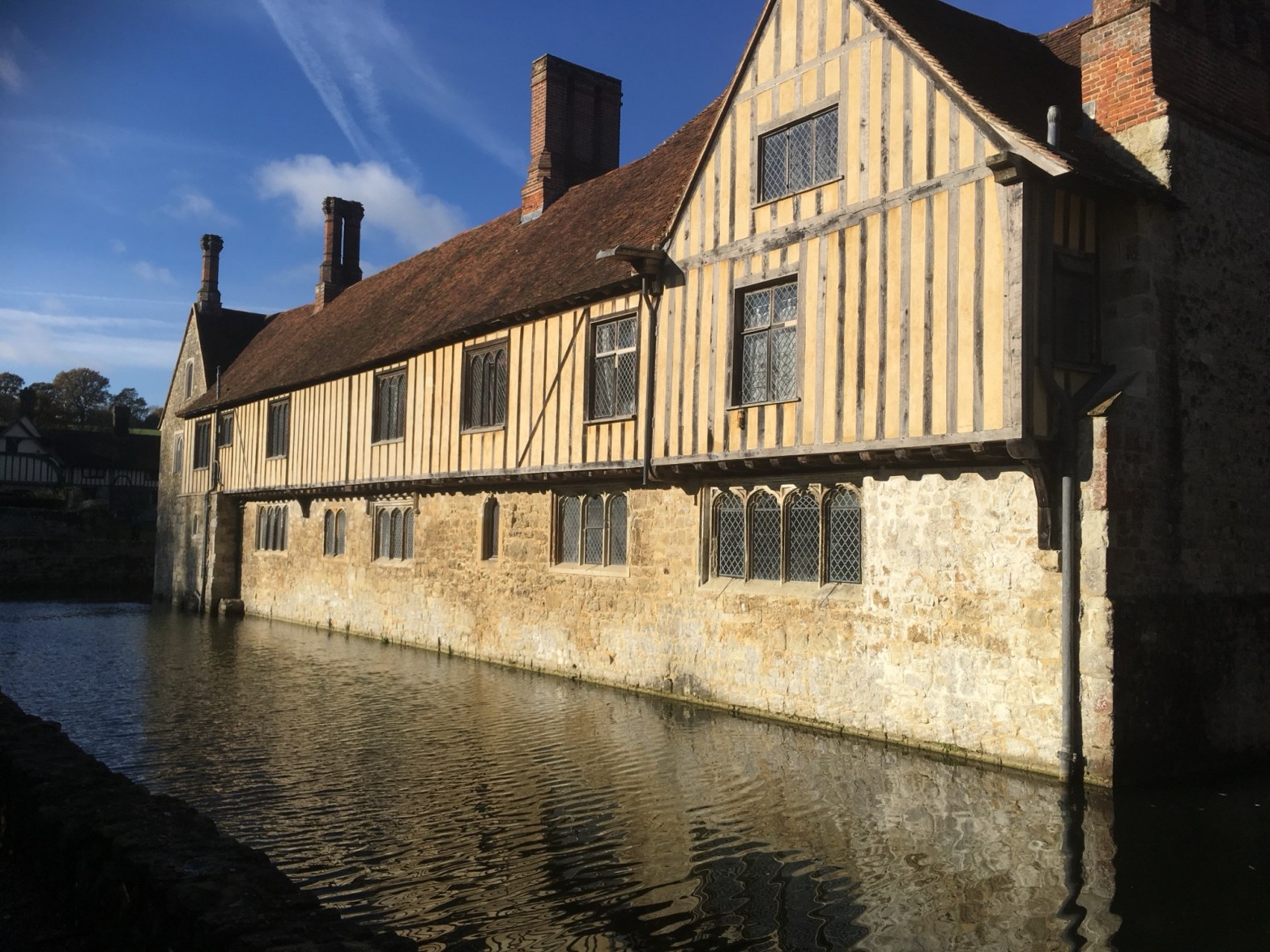
Hidden within a wooded valley in the Kentish Weald, Ightham Mote is one of the finest surviving medieval manor houses in England. With its moated setting, crown-post roofs, timber-framed solar ranges and stone-built hall, the house offers a remarkably complete picture of elite domestic life during the fourteenth century. Few historic buildings in Kent illustrate the evolution of a medieval household so clearly or retain such a rich collection of surviving historic fabric.
Originally constructed in the early fourteenth century, Ightham Mote developed gradually over several centuries as successive owners adapted the house to changing fashions and domestic needs. Despite these alterations, the medieval core survives exceptionally well and remains the defining character of the site today.
The Great Hall: Heart of the Medieval Household
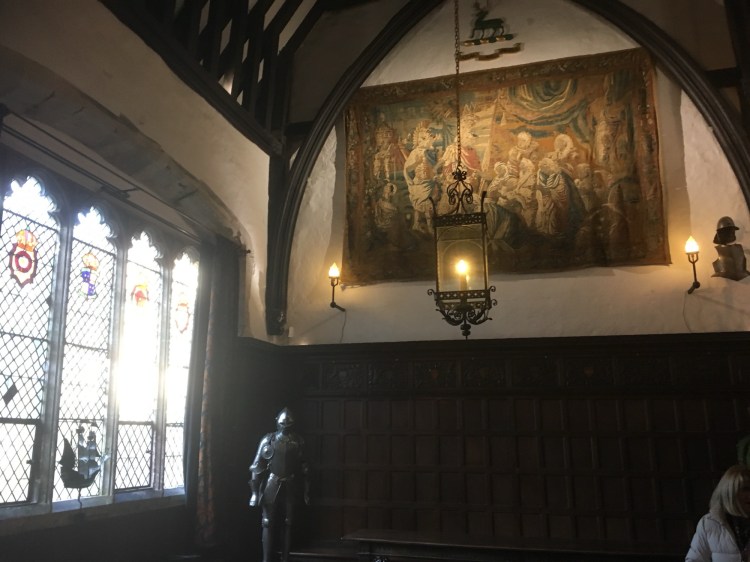
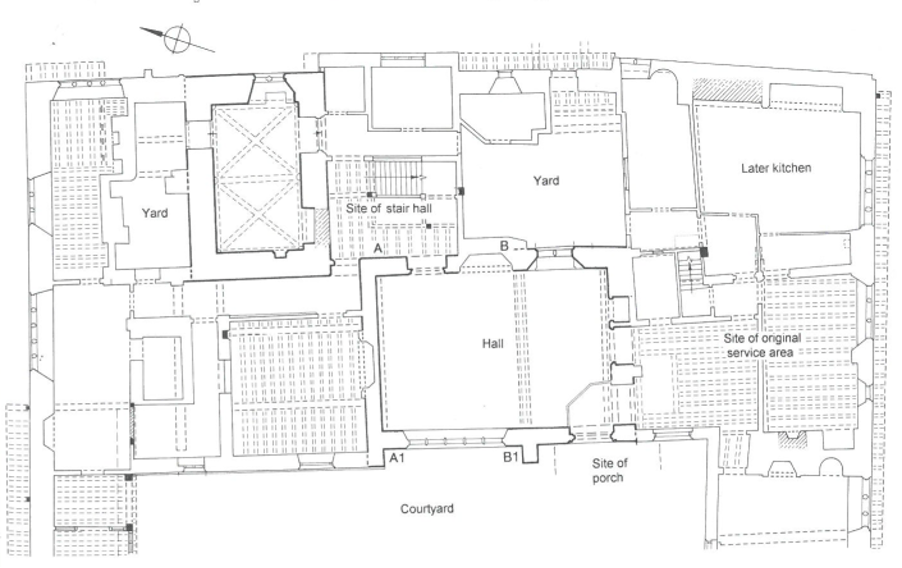
At the centre of medieval domestic life was the Great Hall, the principal communal space where dining, business, hospitality and ceremony took place. At Ightham Mote, the Hall forms the focal point from which the surrounding ranges developed.
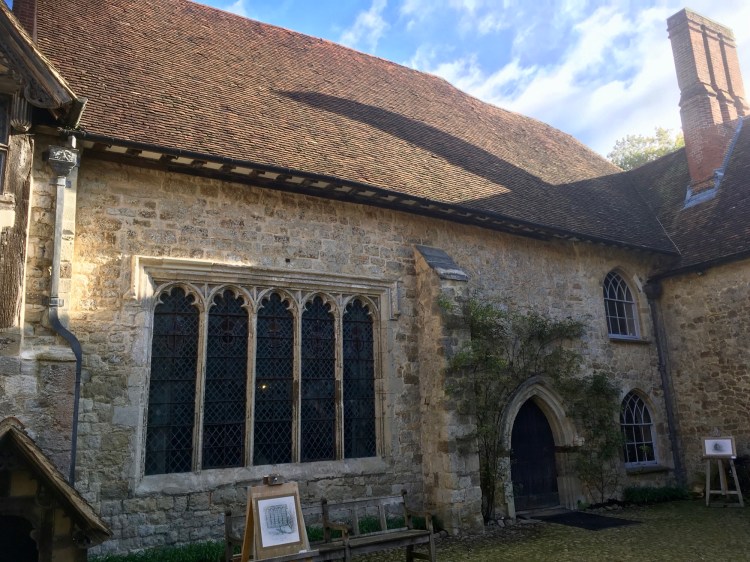
Constructed primarily in stone, the Hall contrasts with the timber-framed ranges around it and immediately conveys a sense of permanence and status. The interior survives with a dramatic crown-post roof structure, steeply pitched above two unequal bays. Such lofty roofs were not simply practical; they were also intended to demonstrate wealth and prestige.
The Hall was entered through a moulded arched doorway constructed in Bethersden marble at the lower, or service, end of the room. The opposite end formed the high end, where the lord and distinguished guests would have dined upon a raised dais beneath decorative panelling and adjacent to the large five-light window.
Like many medieval halls, the original space would have been heated by an open central hearth. Smoke would have drifted upwards into the roof before escaping through a louvre in the roof covering. The blackening of the roof timbers from centuries of smoke was once visible before later restoration works removed much of the evidence.
One of the most remarkable architectural features within the Hall is the central stone arch supporting the roof structure. Such masonry arches are more commonly associated with ecclesiastical buildings and are unusual within domestic medieval architecture. The arch creates a striking sense of division within the Hall while also reinforcing the status and ambition of the building.
Decorative carved corbels further enrich the interior, including figures such as the Green Man with foliage emerging from his mouth. These carvings served both structural and symbolic purposes and demonstrate the craftsmanship invested in even functional elements of the building.
Stone, Timber and Medieval Craftsmanship
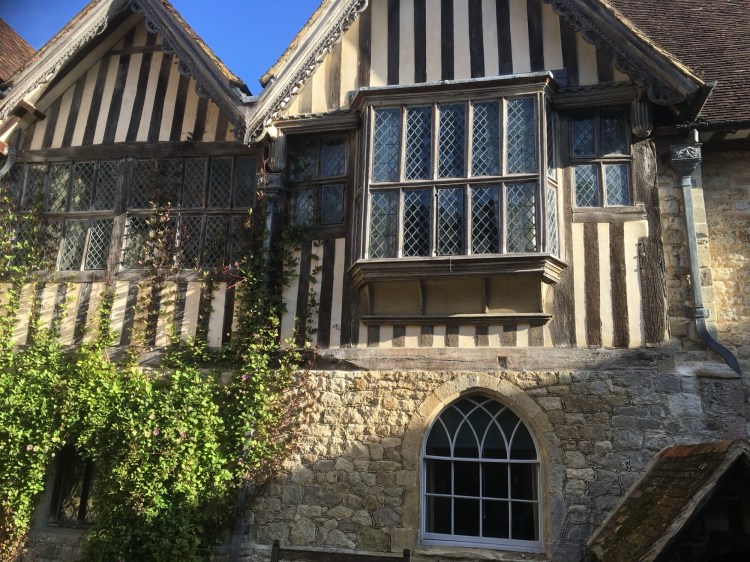
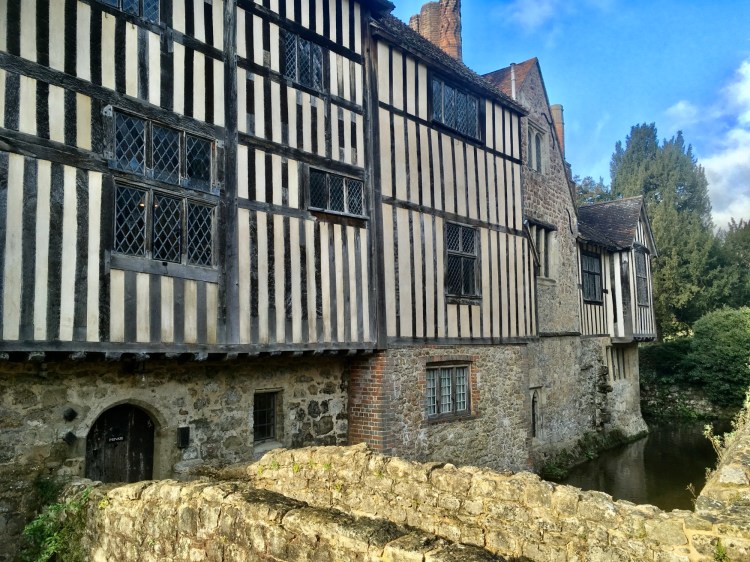
Part of Ightham Mote’s unique character derives from its combination of stone construction and timber framing. The Hall, Chapel and Undercroft were built in stone, while the adjoining private apartments and later ranges employed close-studded timber framing.
This contrast between materials reflects both practical building traditions and social hierarchy. Stone construction conveyed prestige, durability and expense, while timber framing allowed for more adaptable domestic accommodation.
The surviving close studding within the solar ranges is particularly significant. Closely spaced vertical timbers were fashionable during the late medieval period and are often associated with high-status buildings. Their survival at Ightham Mote contributes greatly to the picturesque quality for which the house is now celebrated.
The Solars and Private Domestic Life
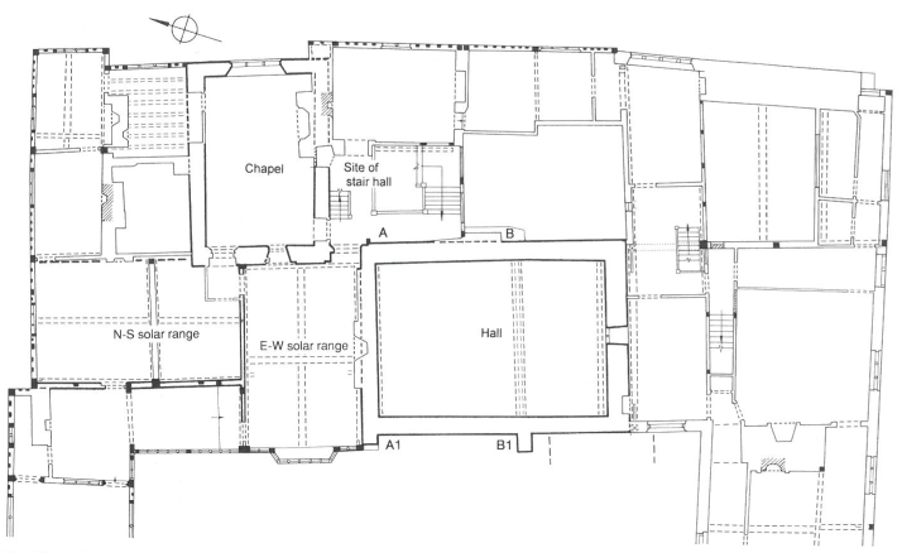
Positioned at right angles to the Hall are the solar ranges, the private apartments used by the lord and his family. These rooms illustrate the growing separation between public and private life within medieval houses.
Tree-ring dating has suggested that the Solars were constructed during the early fourteenth century alongside the Hall itself. Both ranges originally contained two-storey accommodation with crown-post roof structures similar to those found in the Hall.
The arrangement of the Solars demonstrates an increasing concern for comfort and privacy. While the Hall remained a communal and public space, the Solars provided quieter accommodation removed from the noise and smells associated with the service end of the household.
A particularly interesting feature is the squint within the Solar range, which allowed occupants to observe services within the adjacent chapel. Features such as this reveal the close relationship between domestic life and religious observance during the medieval period.
Later alterations introduced mullioned and transomed windows and fireplaces, reflecting changing Tudor expectations for comfort and domestic heating. These modifications illustrate how medieval buildings evolved gradually rather than remaining fixed in a single architectural phase.
The Service End and Everyday Life
At the southern end of the Hall are surviving arched doorways leading towards what would once have been the pantry and buttery. These service rooms formed the working heart of the household and supported the ceremonial life of the Hall.
In a typical medieval arrangement, the service end was deliberately separated from the high end occupied by the lord and guests. Food preparation, storage and household management all took place within these areas.
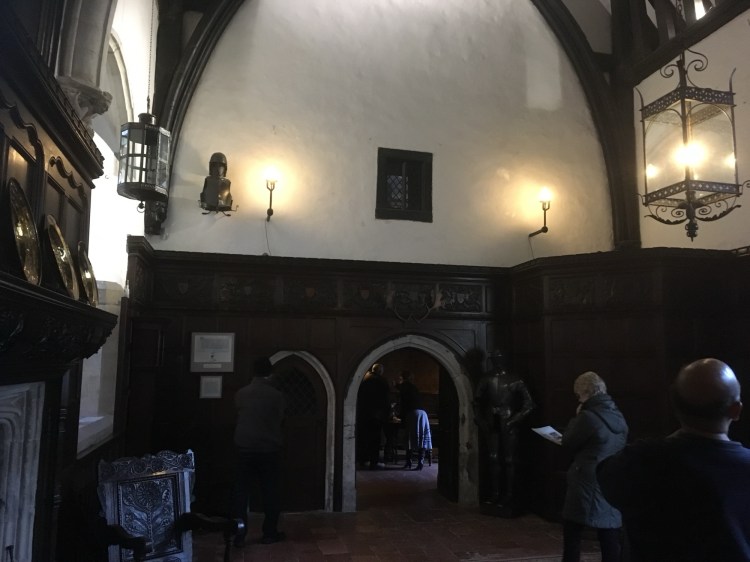
The surviving doorways at Ightham Mote hint at the former complexity of these service spaces, much of which has since disappeared through later alterations. By the late fifteenth century, a larger kitchen range had been added elsewhere within the complex, reflecting changing attitudes towards domestic planning and comfort.
The Undercroft
Beneath the chapel lies the vaulted Undercroft, sometimes referred to as the Crypt. Constructed in stone with rib vaulting and ogee-headed windows, it is one of the most atmospheric spaces within the house.
Although sometimes described as crypt-like, there is little evidence to suggest that the space served a religious purpose. Instead, it was probably used for storage, perhaps for wine or valuable goods.
The architectural quality of the room, however, suggests that it was designed to impress as much as function. The rib-vaulted ceiling and relatively generous windows elevate the space beyond a simple storeroom and demonstrate the ambition of the original medieval builders.
Phases of Development
The earliest phases of Ightham Mote date to the first half of the fourteenth century when the Hall, Solars, Chapel and Undercroft were constructed. Tree-ring analysis of surviving timbers has indicated felling dates between approximately 1320 and 1347.
During the fifteenth and sixteenth centuries, the house underwent substantial alteration and expansion. Fireplaces replaced the open hearth, additional ranges enclosed the courtyard, and decorative glazing and timber-framed facades reflected changing tastes.
Despite centuries of adaptation, the medieval core of the building survives remarkably intact. This layered development is part of what makes Ightham Mote so architecturally significant; the house tells a continuous story of occupation, alteration and survival across more than seven hundred years.
Why Ightham Mote Matters
Ightham Mote is important not only because of its age or picturesque appearance, but because it preserves so many features associated with medieval domestic life. From the Great Hall and crown-post roofs to the Solars, service rooms and Undercroft, the building provides an exceptional insight into the social hierarchy, craftsmanship and evolving domestic arrangements of the medieval period.
Kent possesses a rich tradition of medieval architecture, particularly within the Weald, yet few buildings survive with the completeness and authenticity of Ightham Mote. Its combination of stone construction, timber framing and incremental development makes it one of the most significant historic houses in the county.
Today, the careful conservation of the building allows visitors to experience spaces that still retain much of their medieval character and atmosphere. It remains one of the clearest surviving expressions of late medieval domestic architecture in England and an essential part of Kent’s historic environment.
References
Brunskill, R.W. (2000) Vernacular Architecture: An Illustrated Handbook. 4th edn. London: Faber and Faber.
Emery, A. (2006) Greater Medieval Houses of England and Wales, 1300–1500: Volume III, Southern England. Cambridge: Cambridge University Press.
Historic England (2025) Ightham Mote. Available at: https://historicengland.org.uk/listing/the-list/list-entry/1362410/
Minihan, G. (2015) Ightham Mote in the Fourteenth Century: The Lived Experience of Sir Thomas Cawne (d.1372). Southampton.
National Trust (1988) The Development of Ightham Mote. Tunbridge Wells: National Trust.
Nicolson, N. (2005) Ightham Mote, Kent. London: National Trust.
Pearson, S. et al. (1996) A Gazetteer of Medieval Houses in Kent. London: Royal Commission on the Historical Monuments of England.
Quiney, A. (1993) Kent Houses: English Domestic Architecture. Suffolk: Boydell Press.
Taylor, H. (1905) ‘Ightham Mote’, Archaeologia Cantiana, Vol. 27.

