

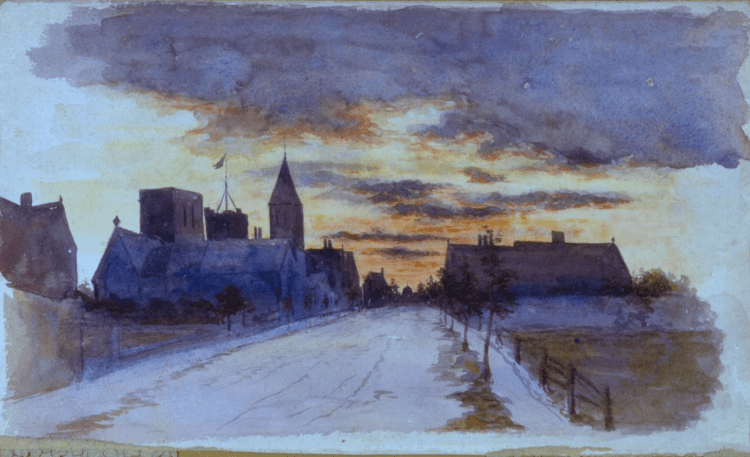
In this post, I offer a brief overview of two important landmarks in Ramsgate. My insights draw on numerous visits to the buildings during Heritage Open Days, as well as additional research. Together, these experiences have deepened my appreciation of their architectural and historical significance.
St Augustine’s Church, Ramsgate
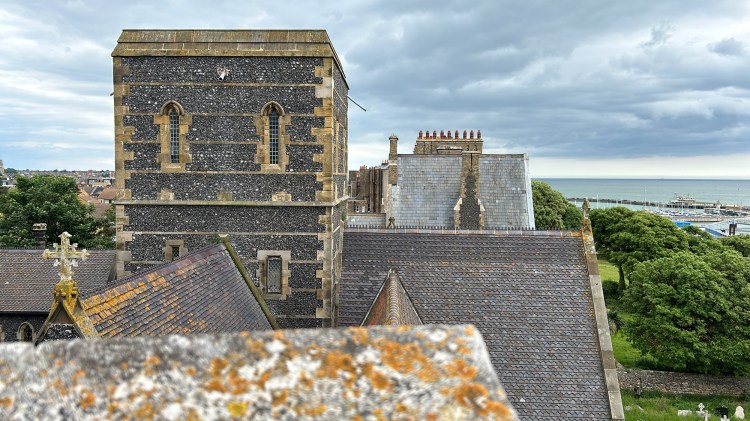
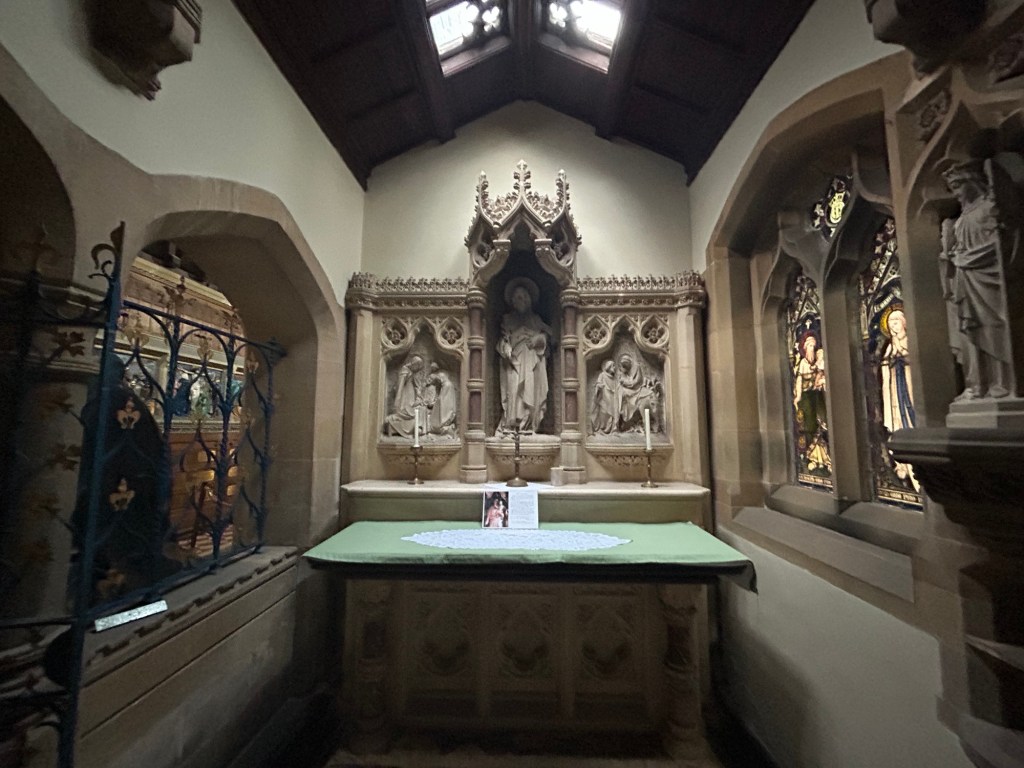
St Augustine’s Church in Ramsgate is a fine example of 19th-century Gothic Revival ecclesiastical architecture. It was designed by the celebrated architect Augustus Welby Northmore Pugin (1812–1852). Constructed between 1845 and 1852, the church was built as Pugin’s personal place of worship and stands today as a powerful expression of his architectural and religious ideals. It is now a Roman Catholic shrine dedicated to St Augustine of England, the missionary who brought Christianity to the Anglo-Saxons.
Gothic Revival Style
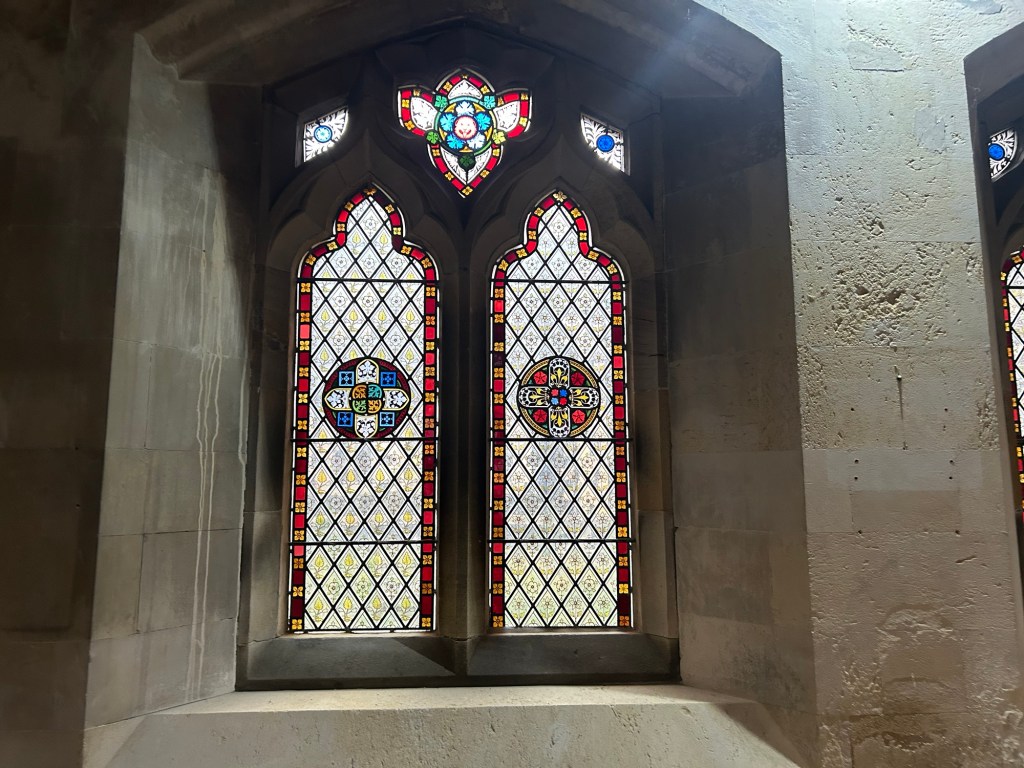
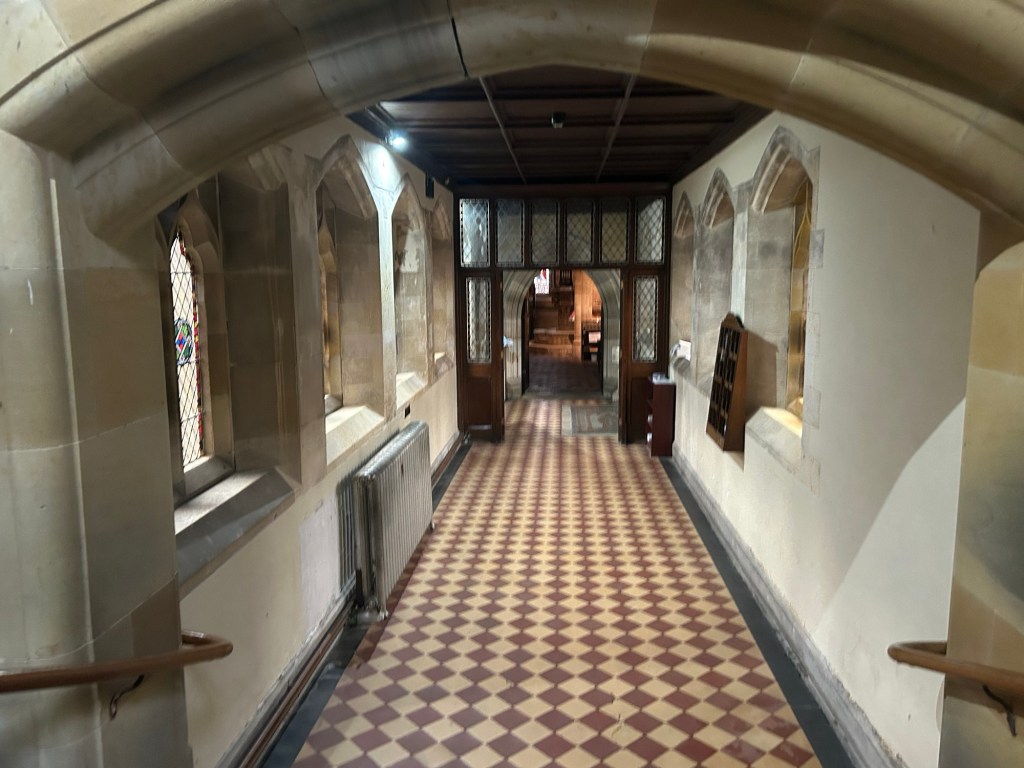
Pugin was one of the foremost champions of the Gothic Revival. He believed that medieval Gothic architecture represented the truest form of Christian design. St Augustine’s reflects this ideology through its Early English Gothic style. This style is characterised by pointed arches, lancet windows and steeply pitched roofs. (See my earlier post for an introduction to encaustic tiles.)
Materials
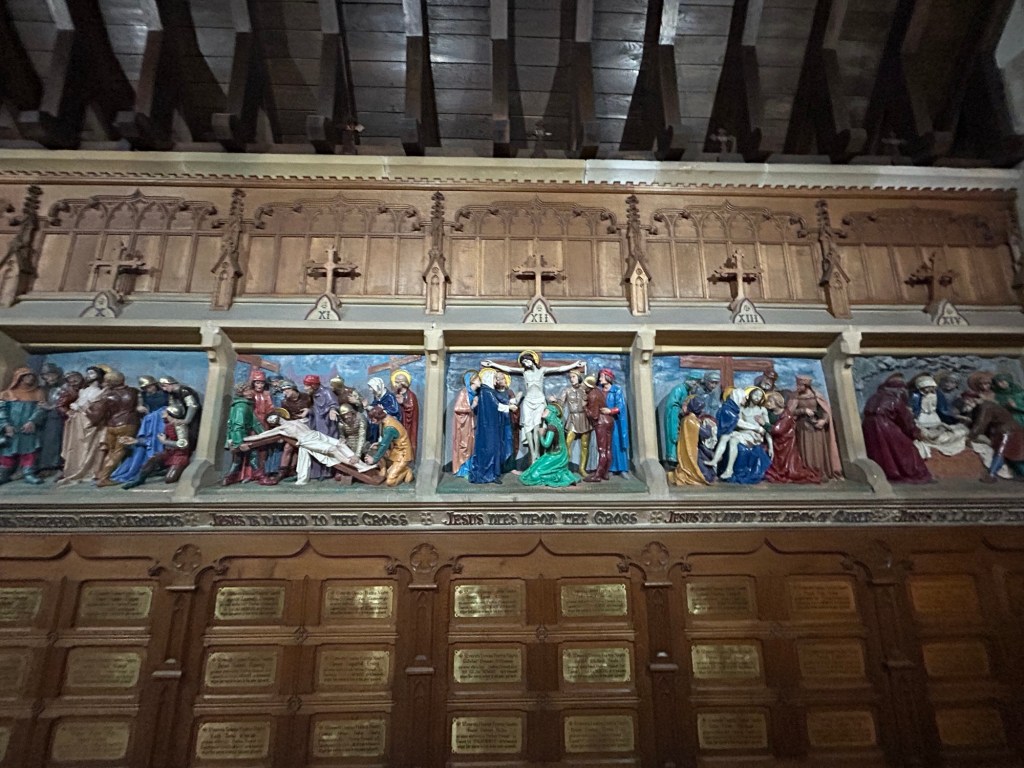
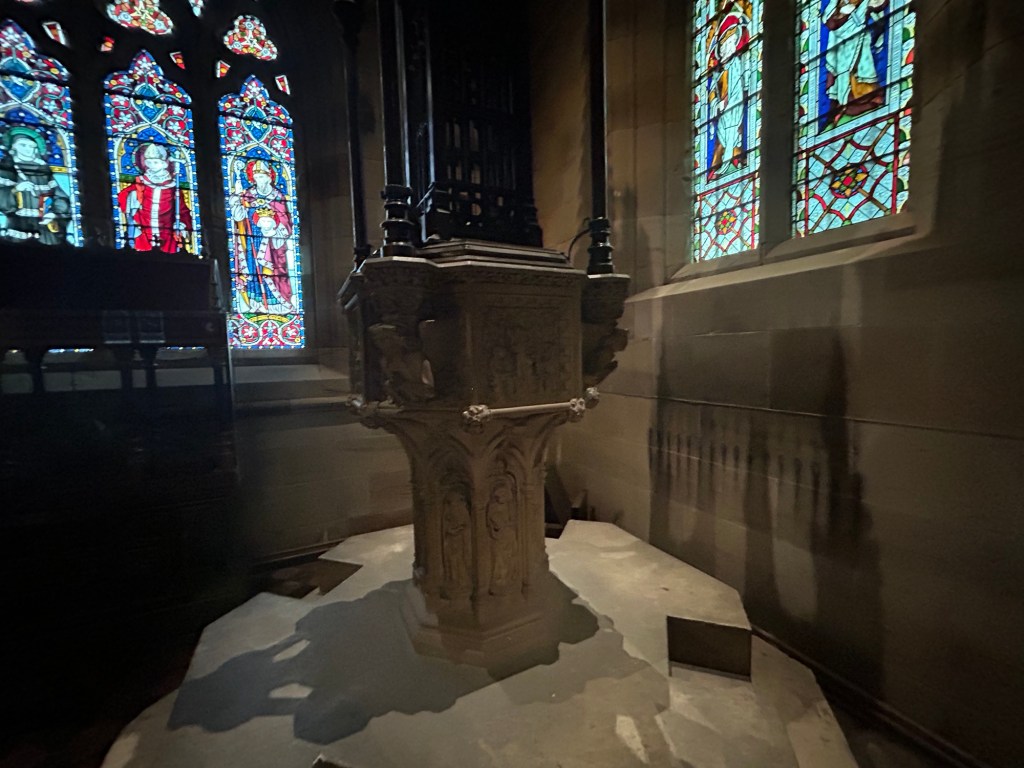
The church is constructed of Kentish ragstone with Bath stone dressings, lending it a rugged, authentic medieval appearance. Internally, key features include encaustic tiles, carved stonework, and wrought iron details. Pugin himself designed or selected many of these elements.
Interior Layout and Design
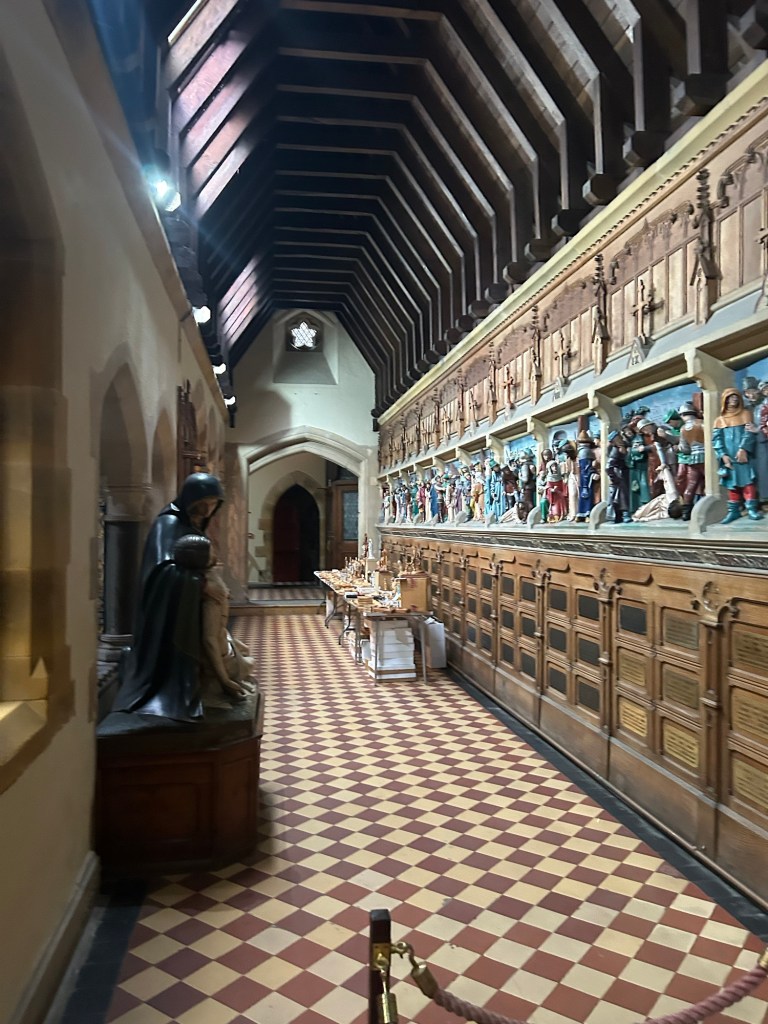
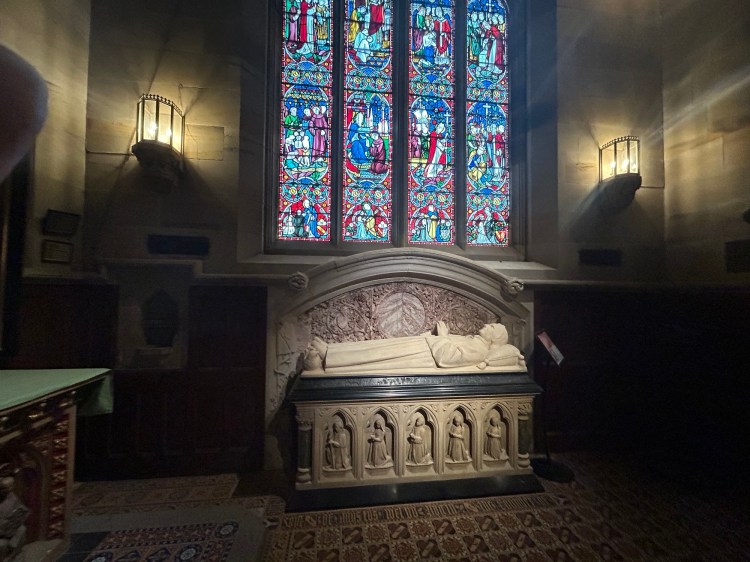
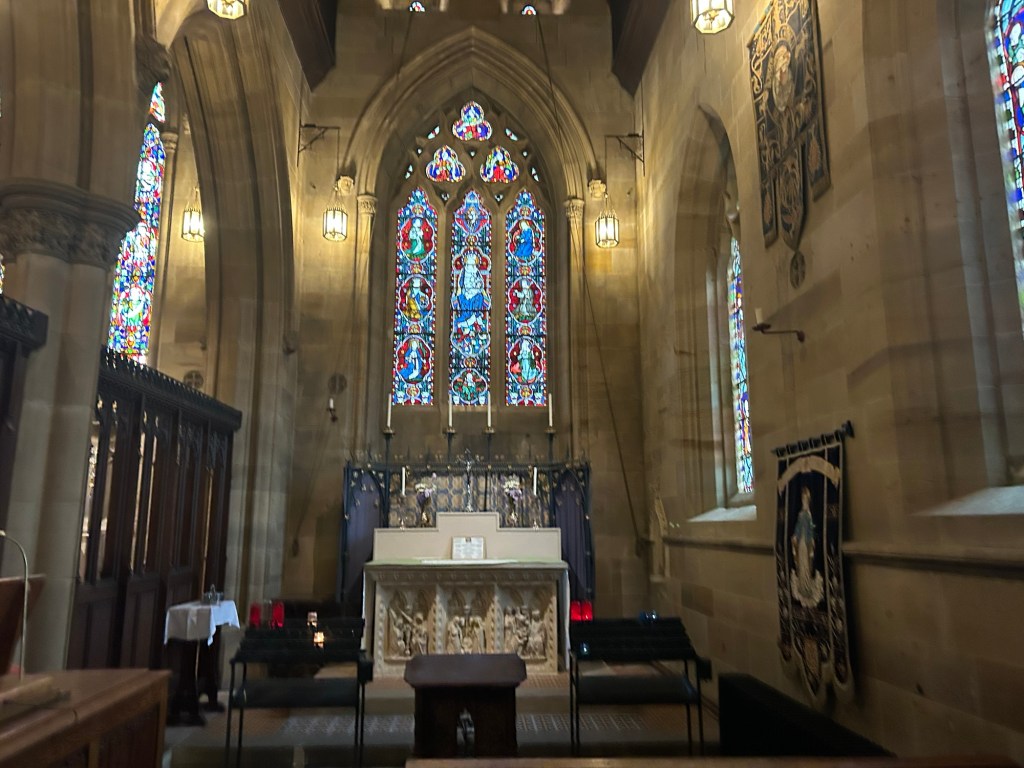
The building comprises a nave, chancel, transepts, and side chapels. The richly decorated interior was carefully designed. It reflects Pugin’s belief in architectural honesty. This is outlined in his influential work Contrasts. Every element serves a liturgical purpose. A square tower on the west front adds vertical emphasis without overwhelming the human scale of the church. Although a central tower and spire were planned, they were never completed. St Augustine’s forms part of a wider complex. This includes The Grange, Pugin’s family home. The adjacent monastery was later designed by his son, Edward Pugin. Augustus Pugin himself is buried within the church, beneath a simple stone tomb in the chantry chapel he designed.
Summary of Significance
St Augustine’s is a Grade I listed building, recognised for both its architectural quality and historic value. It is one of the few churches in Britain designed entirely by a single architect and executed to his precise vision. It remains one of the purest expressions of Pugin’s belief in the revival of Gothic architecture.
The Grange, Ramsgate
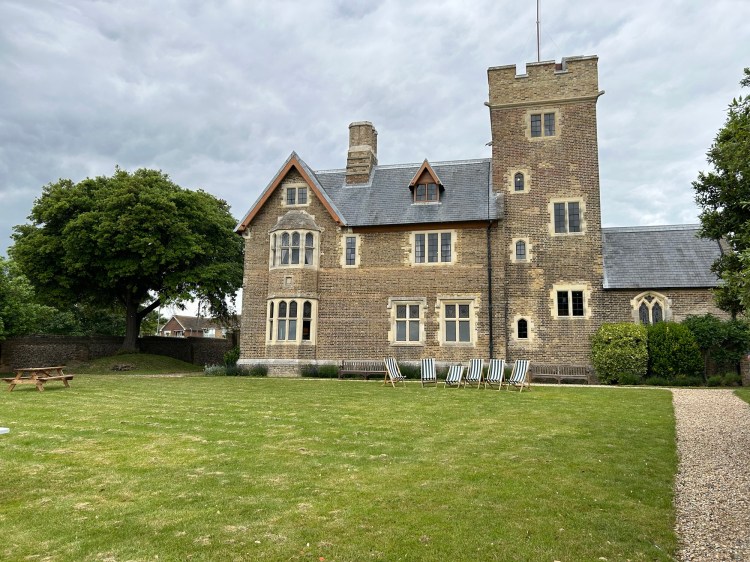
The Grange, designed by Augustus Pugin and constructed in 1843–44, is also Grade I listed and of considerable architectural and historical interest. Pugin, one of the most prolific and influential architects of the 19th century, was a leading figure in the Gothic Revival movement. He believed in a return to the principles of medieval architecture, favouring features such as Gothic tracery, inlaid tiles, and ecclesiastical detailing. Pugin’s work includes designs for churches, convents, schools, and private houses. Notable commissions include the Palace of Westminster (in collaboration with Charles Barry) and St Augustine’s Church (see my earlier post on encaustic tiles for more information).
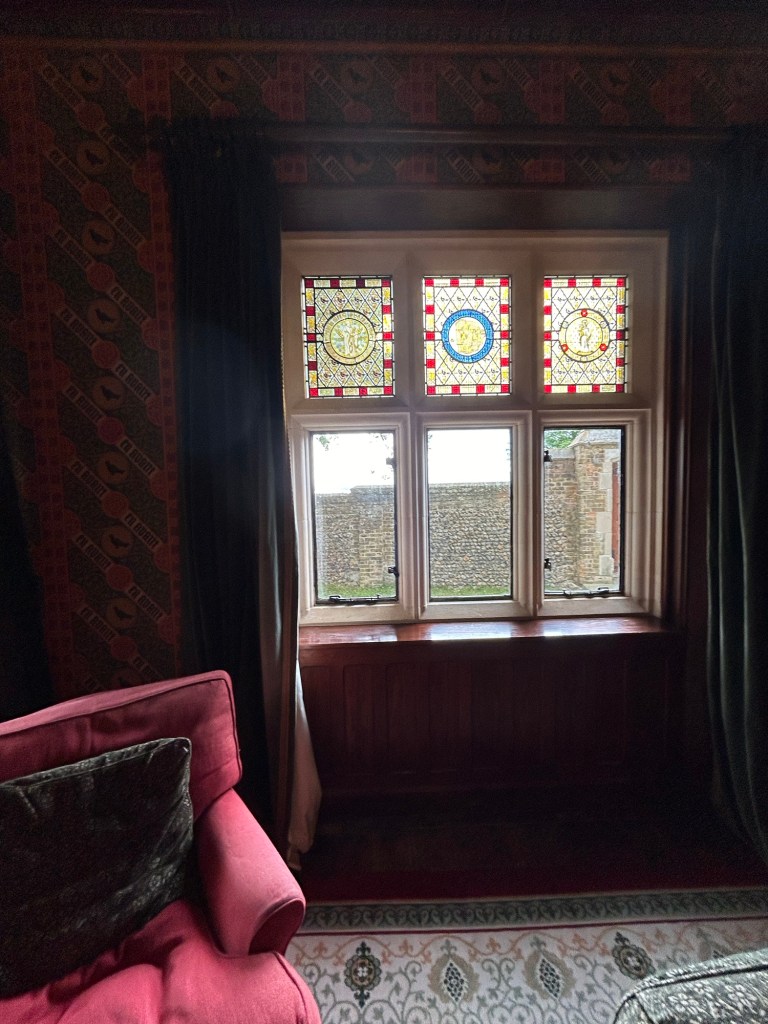

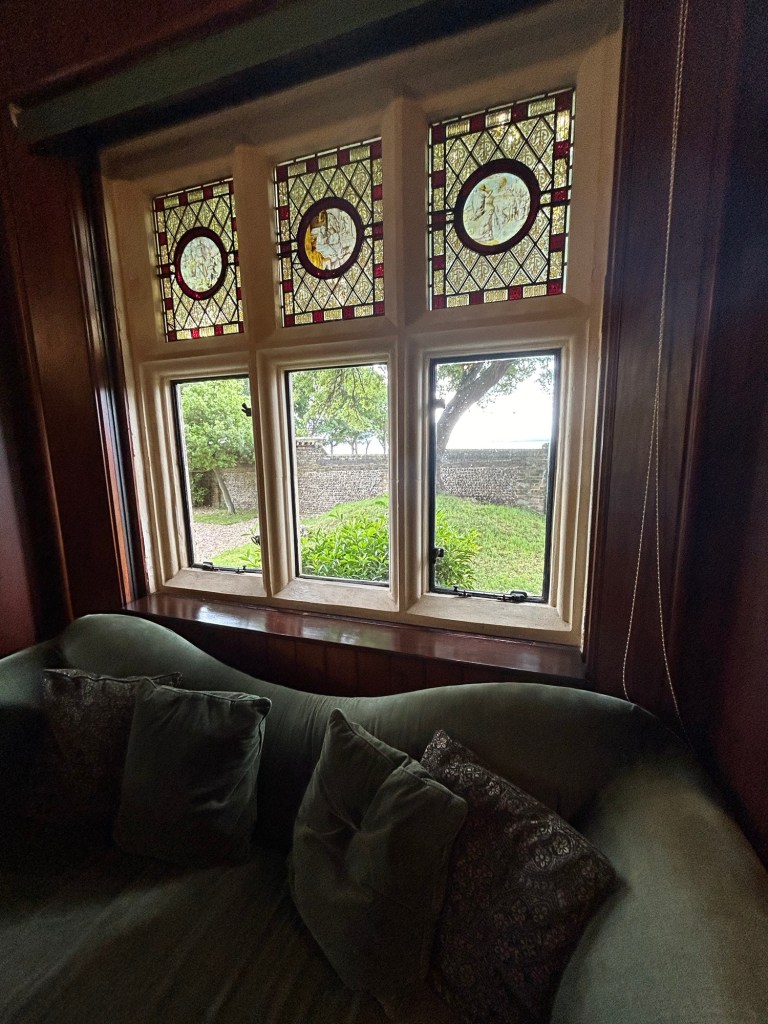
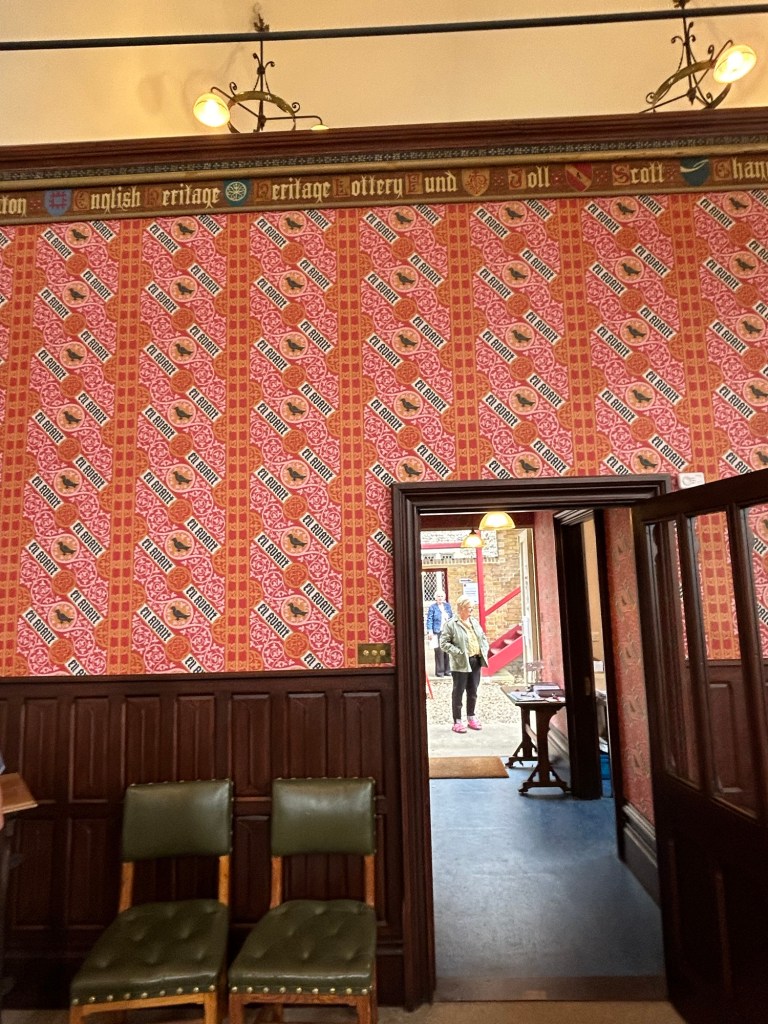
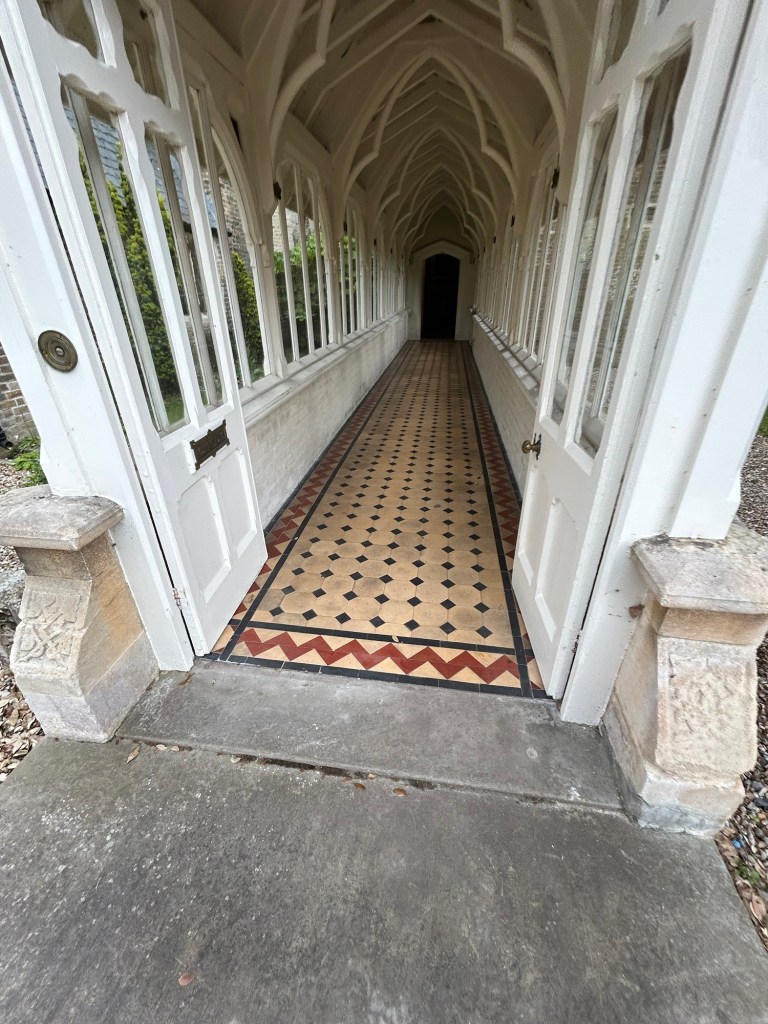
The house has several interesting features. Most evocative is the library, where Pugin completed much of his work. Rich with stained glass and matchboard panelling, it adjoins a private chapel built in 1840. The chapel door, designed by Pugin himself, is a particularly fine example of his architectural craftsmanship.In the hallway, En Avant wallpaper proudly displays Pugin’s family motto, setting the tone for the rest of the house. Floor tiles bearing his initials, AWP underfoot. The sitting room has an impressive stained glass window. It depicts saints. A fireplace is decorated with symbolic motifs. These represent each of his children.
Conservation and Reopening
After Pugin’s death in 1852, The Grange passed to his family. The building faced development threats in the 20th century. It was rescued in 1997 by the Landmark Trust. This was supported by a grant from the Heritage Lottery Fund. Further repairs between 2004 and 2006 were funded by the HLF, English Heritage, Thanet District Council, charitable trusts, and private donors.
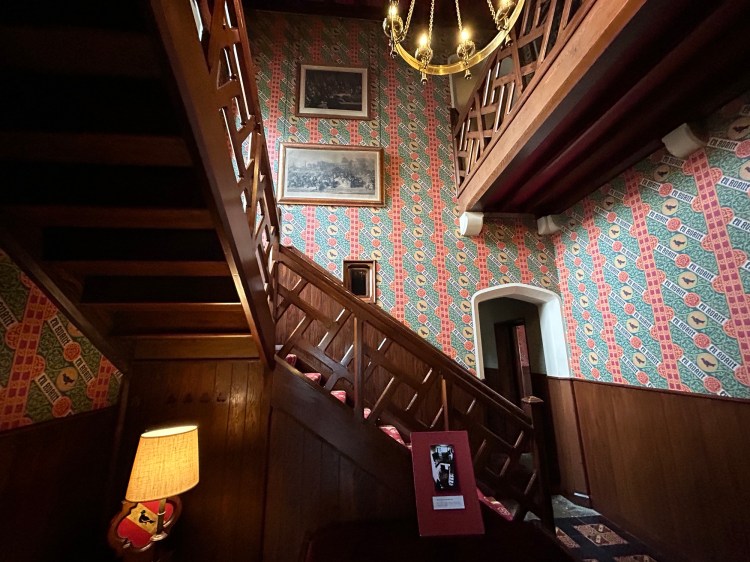
The house reopened in 2006 following extensive restoration, including stone and brick repairs, woodwork conservation, and historically informed decoration. The Landmark Trust aimed to restore the building’s appearance to reflect how it looked in the 1840s. Their restoration was based on surviving documentation. They also utilized physical evidence.
Conclusion
St Augustine’s Church and The Grange each represent a significant contribution. Together, they are important in the evolution of 19th-century Gothic Revival architecture in England. St Augustine’s is one of the few ecclesiastical buildings designed entirely by Pugin. It was realised largely in accordance with his original vision. As such, it stands as a rare and unified expression of his architectural and theological ideals. Adjacent to the church, The Grange, Pugin’s own domestic residence, serves as an important example. It demonstrates the characteristics of a substantial mid-19th-century Gothic Revival family home.
Author: Jeremy Fazzalaro
Photos: All photos belong to author
References and Further Reading
Historic England. St Augustine’s Church (Grade I). List Entry Number: 1273490
The Pugin Society. St Augustine’s Church and the Pugin Connection. https://www.thepuginsociety.co.uk
The Shrine of St Augustine. History and Architecture. https://www.staugustineshrine.co.uk
Hill, Rosemary. God’s Architect: Pugin and the Building of Romantic Britain. London: Allen Lane, 2007.
Historic England Archive. Augustus Pugin and the Gothic Revival.
Landmark Trust

