
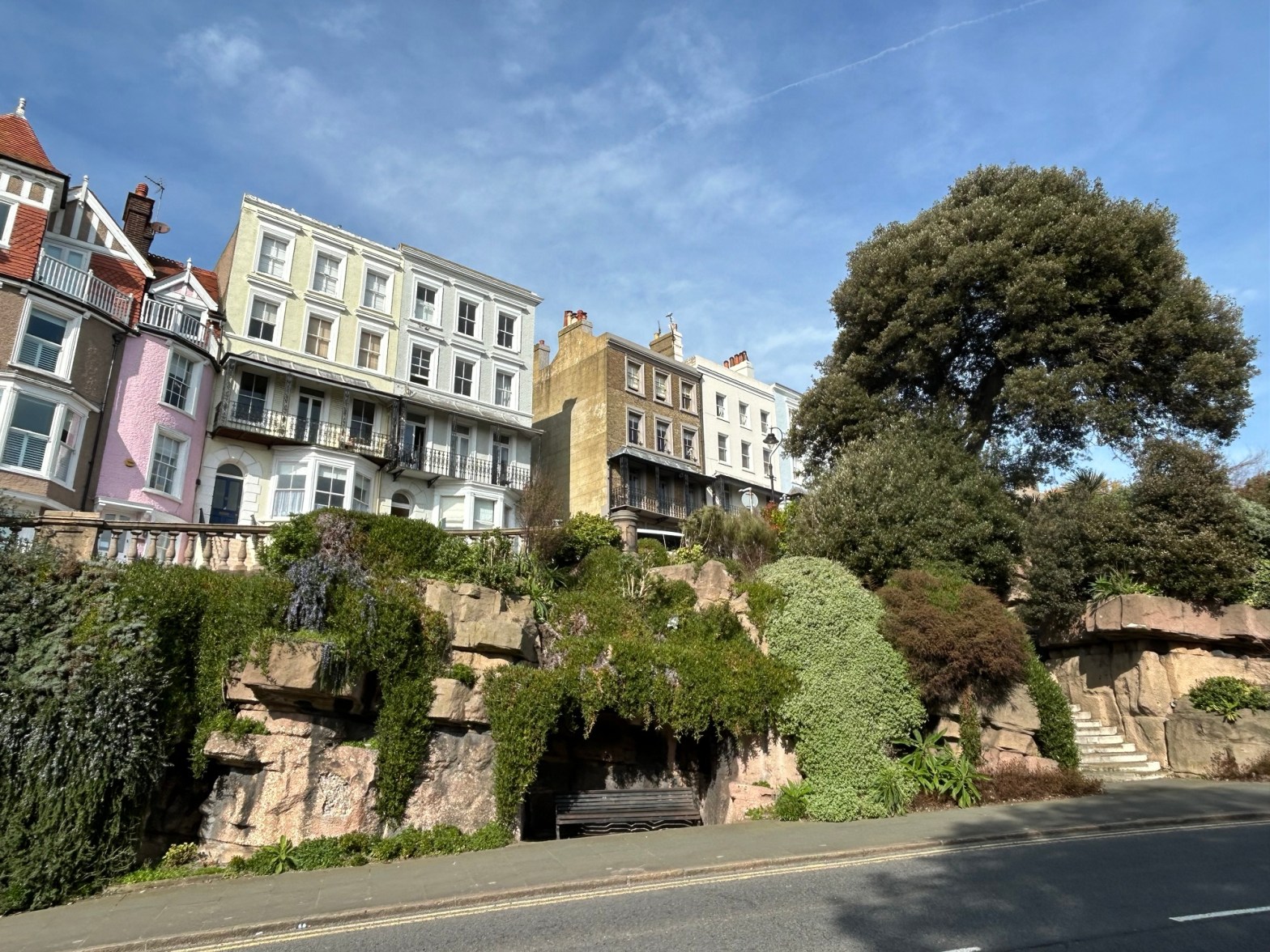
During the 19th century , Britain developed a fascination with the natural landscape. As the nation industrialised, the desire to evoke rugged natural beauty in urban settings gave rise to a remarkable material innovation: Pulhamite.
The Invention of Pulhamite
Pulhamite was the creation of James Pulham (1820–1898) and his family firm, James Pulham & Son, based in Broxbourne, Hertfordshire. Beginning in the mid-19th century, they pioneered an artificial rock material that could convincingly imitate natural stone. The technique, developed and guarded as a trade secret, involved building up a core of brick, rubble, or broken stone, coated with a proprietary mix of cement, sand, and coloured oxides, then carefully textured and tinted to simulate geological strata. This allowed the Pulhams to create grottoes, cascades, rock gardens, and artificial cliffs that looked entirely natural, yet were fully sculpted by hand. Their work combined sculpture with cement technology, offering landscape designers a new level of creative freedom.
As Historic England notes in its guidance “Durability Guaranteed: Pulhamite Rockwork”, the firm’s craftsmanship “transformed the appearance of public parks, gardens and seaside resorts across Britain,” creating artificial landscapes that “deceived the eye and delighted Victorian visitors.”¹
Pulhamite and the Landscape of Tunbridge Wells
One of the Pulhams’ most celebrated commissions was in Tunbridge Wells, Kent. By the mid-19th century, Tunbridge Wells was undergoing civic improvements and Pulhamite rockwork offered an interesting way to add interest to the area . In the 1860s, landscape designer Robert Marnock laid out Dunorlan Park for the industrialist Henry Reed. Marnock commissioned James Pulham & Son to construct a series of rock cascades and ornamental features around the lake. The results were so convincing that visitors often assumed the features were natural outcrops. The Pulham Legacy website describes Dunorlan as “one of the finest examples of inland Pulhamite work, blending seamlessly with the Tunbridge Wells sandstone landscape.”²
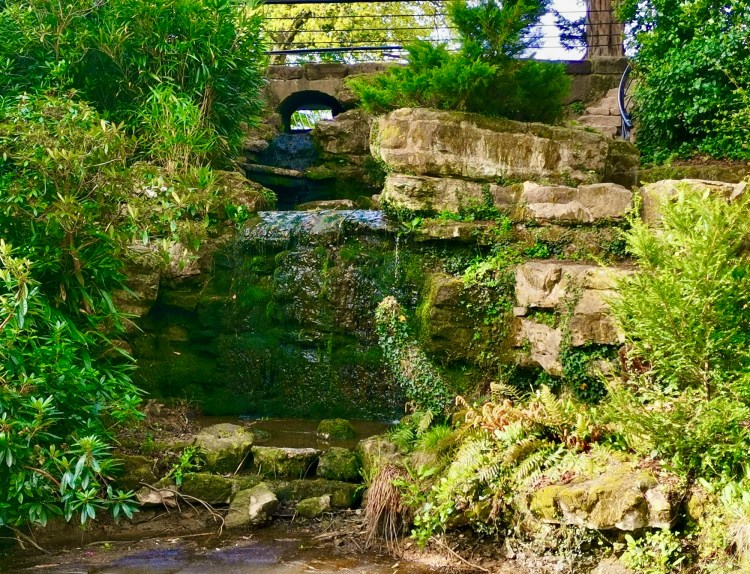
Today, Dunorlan Park is listed as Grade II on the Register of Historic Parks and Gardens of Special Historic Interest. The rockwork remains an important reminder of how Pulhamite could elevate a designed landscape into something believable. Elsewhere in Tunbridge Wells, smaller examples of Pulhamite can be found in garden terraces and ornamental features in Calverley Grounds and surrounding 19th-century villas.
Pulhamite by the sea: Ramsgate’s rock gardens
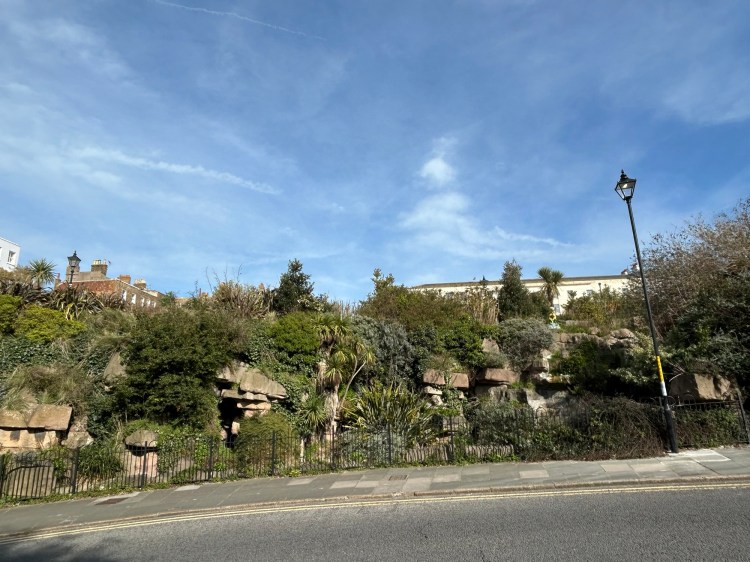
In the late 19th and early 20th centuries, Ramsgate Borough Council embarked on improvements to its cliffs and promenades, transforming steep chalk slopes into landscaped walks. Between the 1890s and 1930s, James Pulham & Son were commissioned to create extensive rockwork at Madeira Walk, Winterstoke Gardens, and along the East and West Cliff chines. The rock gardens of Madeira Walk, designed by Borough Engineer W.A. McIntosh Valon in 1892–93, include Pulhamite of varied colours imitating geological strata, cascading beside the winding road that climbs from the harbour.³

Historic England’s listing description praises the Ramsgate works as “one of the largest and most ambitious examples of Pulhamite coastal landscaping in the country.”⁴ The material allowed the creation of dramatic cliffs, grottoes, and waterfalls where none had existed, helping turn Ramsgate into one of the most fashionable seaside resorts of its era.
Conservation of Pulhamite
Each rock face was modeled by hand, using plastering tools and brushes to mimic the bedding, fissures, and weathering of natural stone. Today, Pulhamite presents unique conservation challenges. The surface render can delaminate or erode, particularly where vegetation has taken hold or where modern cement repairs have trapped moisture. Conservation guidance stresses the importance of using lime-based repair mortars and maintaining good drainage to prolong the life of the original fabric.¹
Conclusion
From the leafy slopes of Dunorlan Park to the cliff walks of Ramsgate, Pulhamite remains a defining feature of Tunbridge Wells and Ramsgate.
Sources
Historic England, Durability Guaranteed: Pulhamite Rockwork (London, 2019).
The Pulham Legacy, Pulhamite in Dunorlan Park, Royal Tunbridge Wells , pulham.org.uk.
Thanet District Council, Ramsgate Pulhamite Leaflet (2020).
Historic England, Rock Gardens and Cascade, Madeira Walk, Ramsgate, List Entry 1336691.
 jfheritage.co.uk