
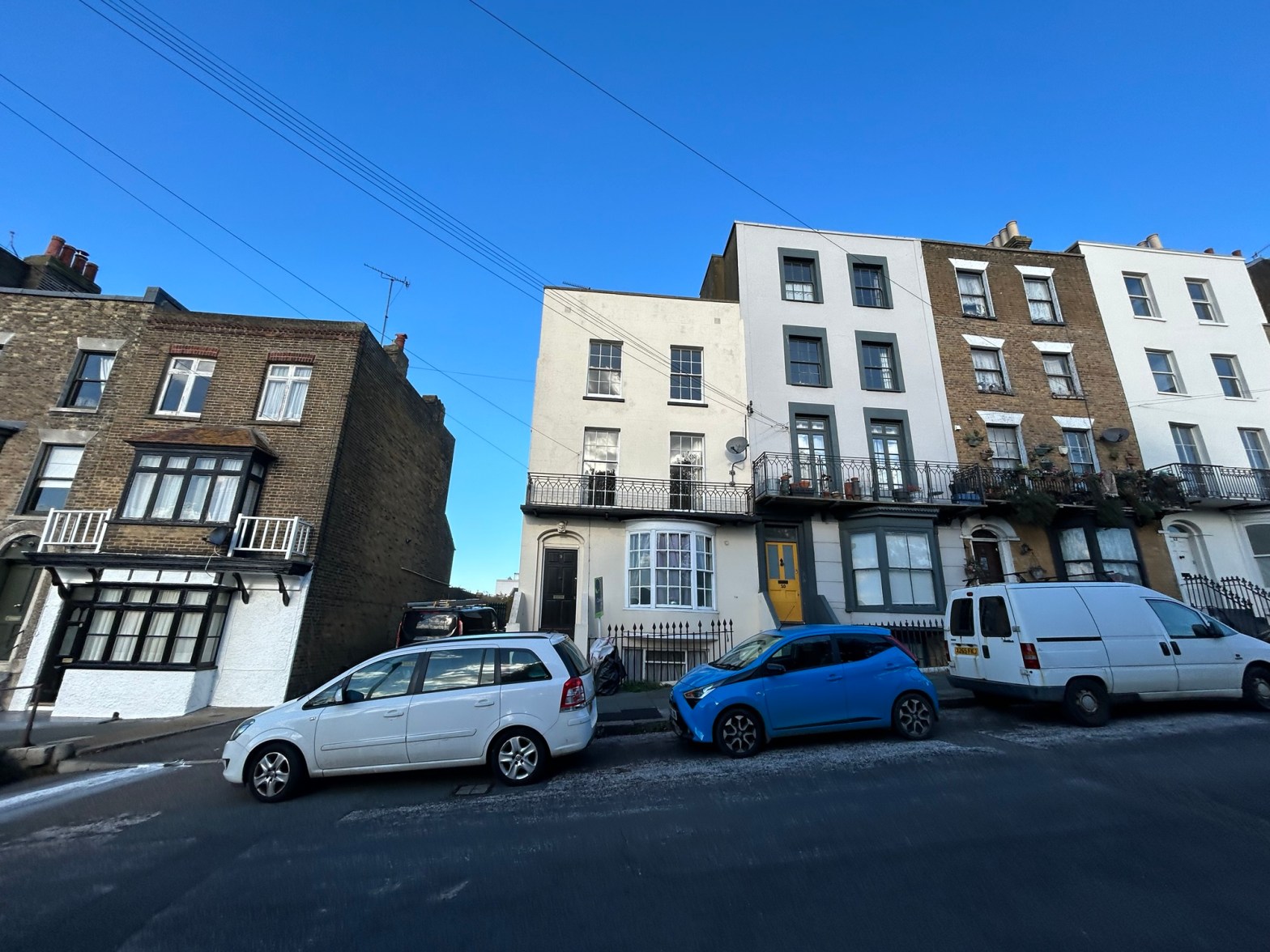
This post aims to provide the public with an overview of the historic development of No. 9 Trinity Square, Margate. It also highlights its significance. This follows a detailed survey, report, and heritage statement I conducted for the property.
The property, known as Park View, 9 Trinity Square, is a Grade II listed building dating from the early 19th century. It is an end-of-terrace house and forms part of a significant group of listed buildings, including Nos. 1 to 7, Nos. 9 to 24, the railings outside Nos. 1 to 7, as well as Nos. 1 and 2 Albion Place. The site is situated within the Margate Conservation Area, further enhancing its historic and architectural importance.
Historic Development
A historic map regression has been undertaken to understand the development of the site. The Historic Environment Record, Historic England Archive and various online resources have been consulted in preparation for the assessment.
Nineteenth Century
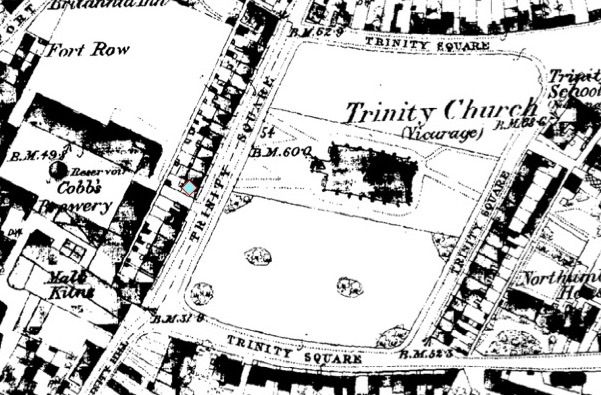
Margate began to grow as a seaside resort in the 18th century, with visitors coming for the perceived health benefits of sea bathing. This popularity led to urban expansion, including the area around what would become Trinity Square. The earliest map consulted in the 1871-1890 OS map (Figure 1) which shows Trinity Church with residential development to the east, south and west, and comprising of predominantly terrace properties on long narrow plots, this includes the site.
The construction of Holy Trinity Church in 1825 was a significant development in the area. The church served as a focal point for the growing community. It was designed by the architect William Edmunds of Margate. In 1829, it was consecrated by Dr. William Howley, who was the Archbishop of Canterbury at that time.
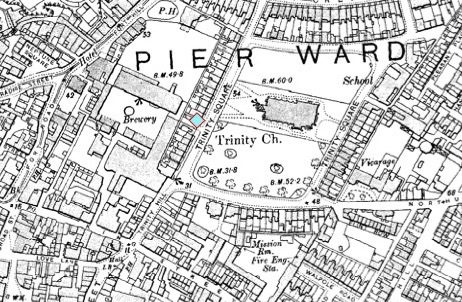
By the mid to late 19th century, Trinity Square was a well-developed area, with Cobb’s Brewery and Malt Kilns located to the rear of the site, serving the surrounding community. Trinity School, to the northeast, provided education for local children. The area evolved to accommodate both visitors and residents, with elegant townhouses and shops emerging nearby. Although the southern area saw gradual development, as shown on the 1897-1900 OS map (Figure 2), few changes occurred on or around the site during this period.
Twentieth Century
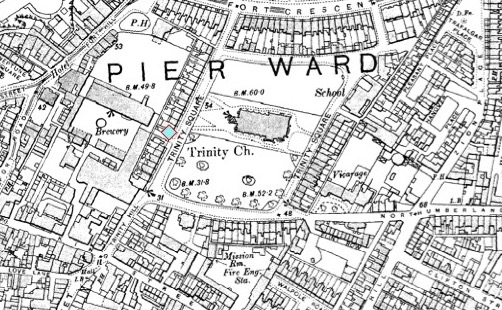
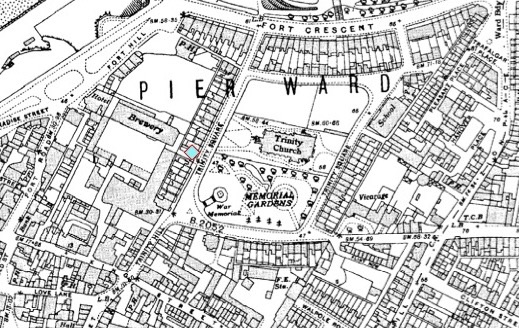
The 20th century marked a transformative era for Trinity Square. The 1907-1923 OS map (Figure 3) illustrates the broader Margate area, revealing an absence of significant alterations at the site during this time. In 1943, the church was bombed and sustained partial damage, yet it remained operational for services until its demolition in 1958. The 1929-1952 OS map (Figure 4) displays the establishment of the memorial gardens in the post-war period. The war memorial, designed by Robert Dalby Reeve, was erected to the south of the church in 1922.
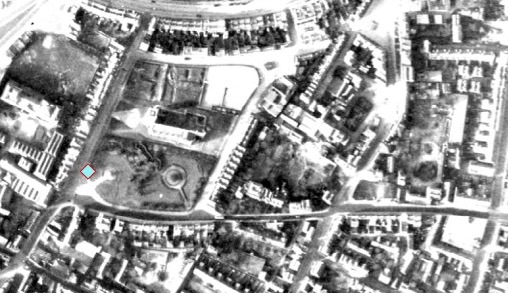
Like much of Margate, the square experienced periods of decline and redevelopment as the town adapted to economic changes and shifting tourism patterns. A review of historic maps from the early to mid-20th century shows no major alterations to the site. A 1946 aerial photograph (Figure 5) highlights the variety of roof forms, which contribute to the distinctive character of the conservation area.
Twenty-first century
By the end of the 20th century, Trinity Square underwent further changes, as evidenced by the aerial photograph from 1990. This included the establishment of a car park where the church once stood, and the demolition of buildings in the area to the rear of the site. Today, Trinity Square reflects a blend of its historic character and modern adaptations. While some surrounding buildings retain their 19th century charm, the area has experienced various phases of urban regeneration aimed at revitalising Margate as a cultural and artistic hub.
Trinity Square’s history is closely tied to Margate’s evolution from a Georgian seaside resort to a modern town. The map regression indicates that Trinity Square developed significantly by the late 19th century, featuring key elements such as Holy Trinity Church, residential terraces, Cobb’s Brewery, and Trinity School. Minimal changes occurred during the early 20th century until the church was bombed in 1943 and subsequently demolished in 1958. Post-war development included the establishment of memorial gardens and a war memorial. The area has experienced periods of decline and redevelopment, with historic maps and photographs highlighting its distinctive character within the conservation area.
Significance
The following desk-based assessment of heritage significance is proportionate to the importance of the Identified heritage assets. It is intended to provide a sufficient level of description to understand the likely impacts of future change through the development, given its nature and extent. This assessment work is based on review of existing published information, desktop only archival research, and one on-site visual survey.
The following elements contribute to the significance of the listed building:
Architectural Interest
The architectural interest of 9 Trinity Square lies in its early 19th century design and its well- preserved features that reflect the period’s architectural style.
Exterior
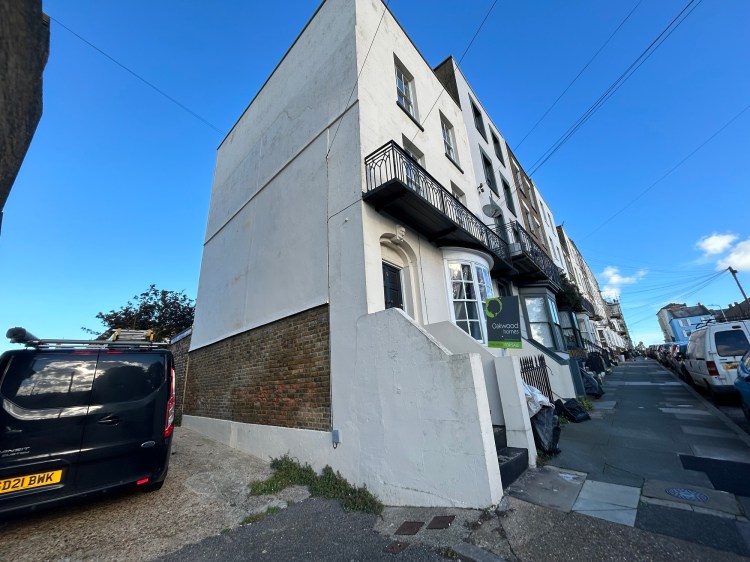
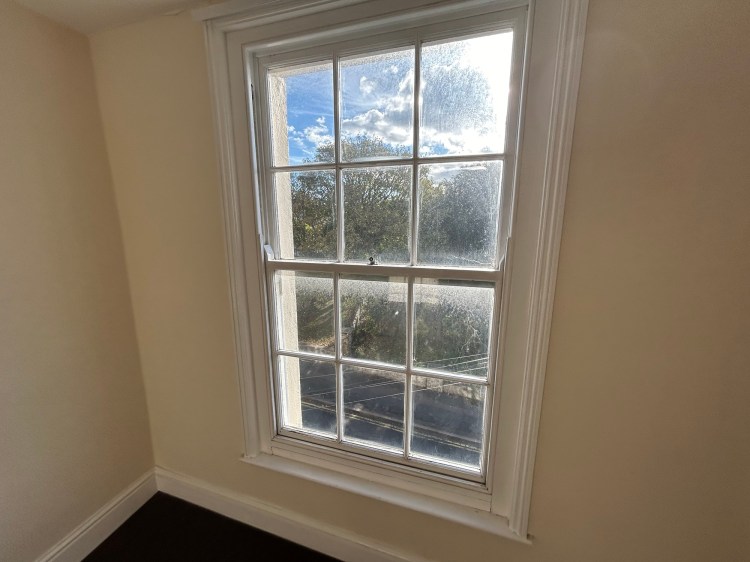
The use of brown brick with a rendered front is typical of the early 19th century, and the adjoining terraces. Timber sash windows are characteristic details of the Georgian and early Victorian properties. The property has 4 timber sash windows on the front elevation with intact glazing bars, these are important features that add to the architectural interest of the building.
In the 18th and 19th century, the formal entrance to a property was often the most ornate. The doorcase has a cambered arch and a decorated keystone, that enhances its architectural interest. To the right of the doorway is the bow window, these features becoming increasingly common towards the end of the 19th century. The bay windows on the rear elevation are of a different design, consisting of three lights, with obscure glazing on the second-floor bay window, this somewhat detracts from the architectural interest of the building. The variation of window designs contributes to the architectural interest of the building. The balcony adds visual interest to the elevation and is a distinctive feature of 19th century residential design.
Interior
Upon entering the building, the hallway leads to a staircase that provides access to the upper floors. The staircase appears to be original. The handrail is clearly a later addition. There are no other notable architectural features on the ground floor. Moving to the first floor, the sitting room retains its chimney stack. This is an important architectural feature. It serves a functional purpose. It also adds to the building’s special interest. The timber sash windows (Figure 7) in this room are also significant, as previously described. To the rear of the first floor is the kitchen and bathroom area. A partition wall divides it. This is a modern addition of no significance. It was recently installed. This partition does not contribute to the building’s overall significance.
On the second floor, there is a single casement window in the hallway that appears to have been added later. The main features of this floor are the bay windows at the rear. The timber sash windows are at the front. The rear bay window has been altered. It no longer retains its original glazing bars, unlike the timber sashes at the front. Therefore, it is of lesser significance. Overall, No. 9 Trinity Square’s architectural features primarily consist of the timber sash windows, chimney stack, and staircase. The property is part of a coherent group of listed buildings. This underscores its importance in the architectural heritage of Margate.
Historic Interest
The historic interest of 9 Trinity Square is closely tied to its role in the development of Margate during the early 19th century. This was a period when the town was emerging as a fashionable seaside resort. Built in the early 19th century, the property reflects the architectural style and urban planning trends of the time, contributing to our understanding of Margate’s social and economic evolution.
No. 9 is part of a cohesive group of listed buildings in Trinity Square, which collectively underscore the area’s historical significance as a residential and commercial hub. The building’s inclusion in this group, along with its Grade II listed status, highlights its importance in preserving the character of Margate’s historic built environment.
The architectural details include the original sash windows, bow window, and cambered doorcase. These well-preserved elements provide insight into the design preferences of the period. They also reveal the construction techniques of that time. This continuity of design in several properties in Trinity Square highlights the area’s historical development during the 19th century.
Contribution of setting to Significance
The significance of a heritage asset is greatly influenced by its surrounding setting, making it crucial to consider this aspect. In the case of 9 Trinity Square, its immediate setting includes the road directly in front of the building and the garden area to the rear. The property can be viewed from Trinity Square, allowing for an appreciation of its aesthetics. This contextual relationship enhances the overall significance of the building and facilitates continued appreciation of its urban surroundings.
Summary of Significance
The architectural interest of 9 Trinity Square lies in its early 19th century design and well-preserved features that exemplify the architectural style of the period. Key elements include the brown brick and rendered façade, typical of the era, as well as the timber sash windows with intact glazing bars, which are characteristic of Georgian and early Victorian properties.
No. 9 Trinity Square holds historic interest due to its role in Margate’s development during the early 19th century when the town was expanding as a popular seaside resort. The building forms part of a cohesive group of listed properties in Trinity Square, reflecting the architectural and urban planning trends of that time. This group of buildings highlights the area’s significance as a residential and commercial hub in Margate’s history. The setting of 9 Trinity Square plays a crucial role in its significance. Its immediate surroundings, including the road at the front and the garden area at the rear, allow for views that enhance the appreciation of the building’s architectural qualities. The contextual relationship between No. 9 and its urban environment within Trinity Square emphasises its importance within the streetscape. The special interest of the building is reflected in its Grade II listed status.
This post has provided an overview of the historic development of Trinity Square and the significance of No 9 Trinity Square, highlighting its architectural features and historic development.
All photos: belong to Jeremy Fazzalaro
Sources
List description: https://historicengland.org.uk/listing/the-list/list-entry/1094688
 jfheritage.co.uk