
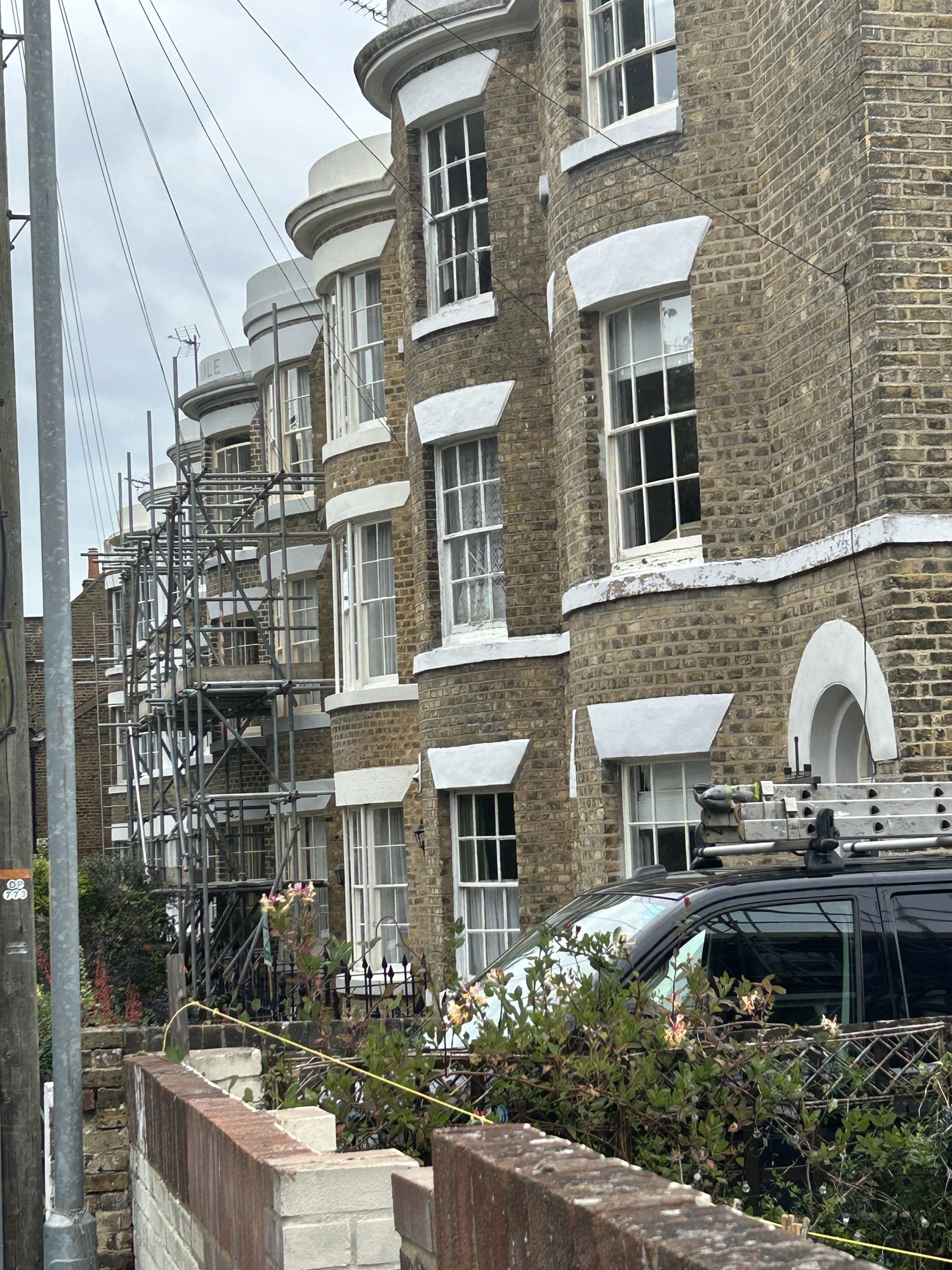
In this post, I provide an overview of the historical development of bay windows, along with common problems and potential solutions. Bay windows, often featuring ornate decorative detailing, enhance the façade of buildings, adding significant visual appeal. This architectural feature was particularly popular in the late 19th century, as evidenced by the numerous bay windows on Victorian semi-detached, detached, and terraced properties throughout the United Kingdom. While most bay windows are located at the front of a property, rear bays were also desirable for allowing additional light into the kitchen and pantry.
There are two main styles of bay windows: square and polygonal. These windows typically have either hipped or flat roofs and can be single-storey or, in some cases, double-storey. The detailing around bay windows varies depending on the region; for example, in London and the southeast, brick and artificial stone were commonly used.
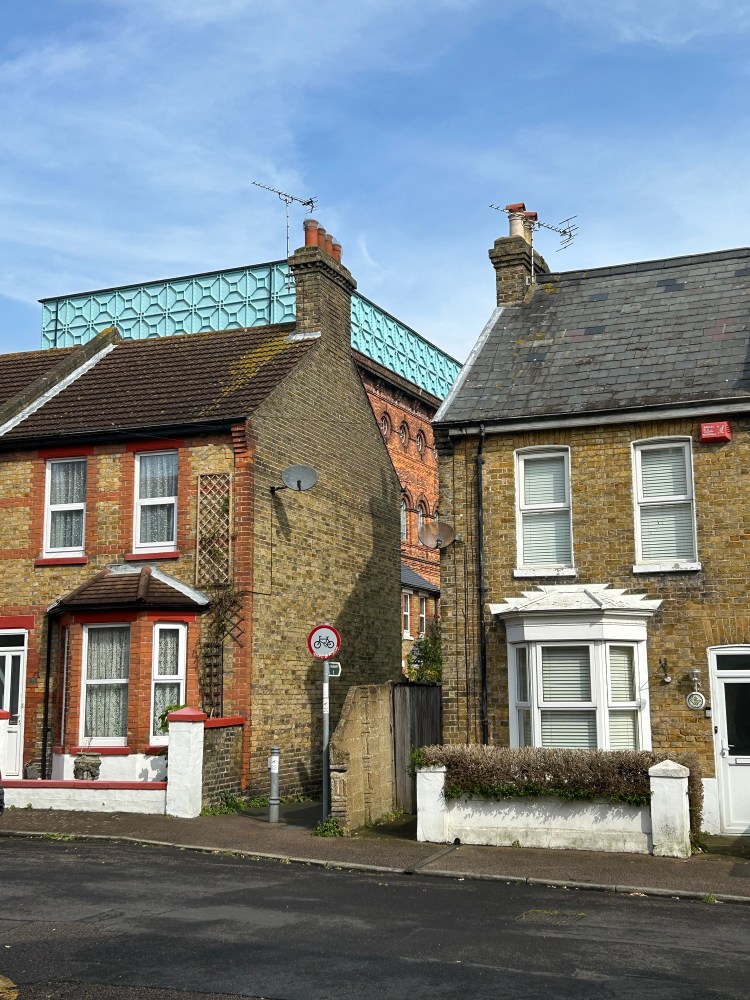
View of a group of Victorian semi-detached buildings with polygonal bay windows
Historic Development of the Bay window
Bay windows are prominent architectural features and have a long and interesting history. The precursor to bay windows, oriel windows, were common in medieval Europe, especially in England. These windows projected from the upper stories of buildings and were often supported by brackets or corbels. They provided additional light and space, and were often decorated. In the 16th century, bay windows became more widespread in English residential architecture. They were characterised by their rectangular or polygonal shapes, mullioned windows, and decorative leaded glass.
During the 16th century, bay windows gained popularity in residential architecture, especially in country houses. These windows allowed for more light to penetrate deep into the interiors and offered a panoramic view of the outdoors. The 18th century saw bay windows becoming more integrated into the design of houses. This era favoured a more restrained and classical approach to architecture, leading to simpler and more uniform bay window designs. The sash window, consisting of sliding panels, became a common feature, allowing for practicality and aesthetics.
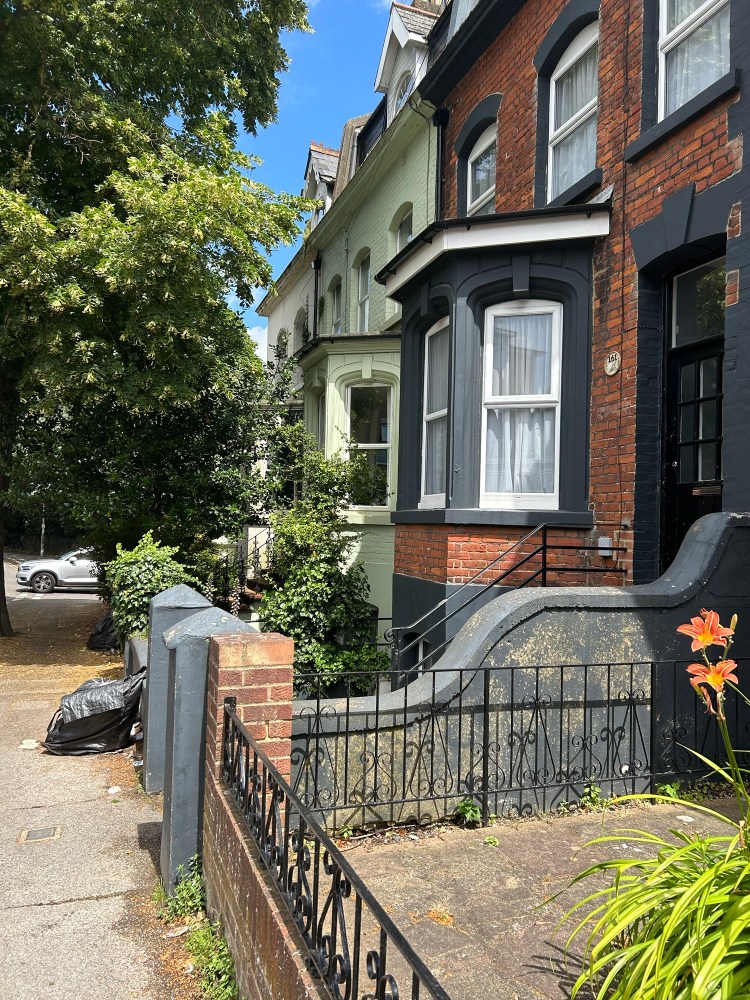
A typical bay window in Ramsgate
The 19th century marked the zenith of bay window popularity. This period’s architectural styles, particularly Gothic Revival and Queen Anne, embraced the ornate and the picturesque. Bay windows became larger and more decorative, often featuring intricate woodwork, stained glass, and elaborate cornices. They were a symbol of wealth and status, adding both aesthetic appeal and functional space to Victorian homes.
In Victorian urban planning, bay windows were incorporated into the facades of terraced houses, semi-detached and detached properties along city streets, maximising space and light in densely populated areas. The three-sided bay window, or canted bay, and the rounded bow window were particularly prevalent. In the post-war era, bay windows were often included in suburban housing developments, and continue to be used as a means to increase natural light and often feature minimalistic and materials like steel and aluminium.
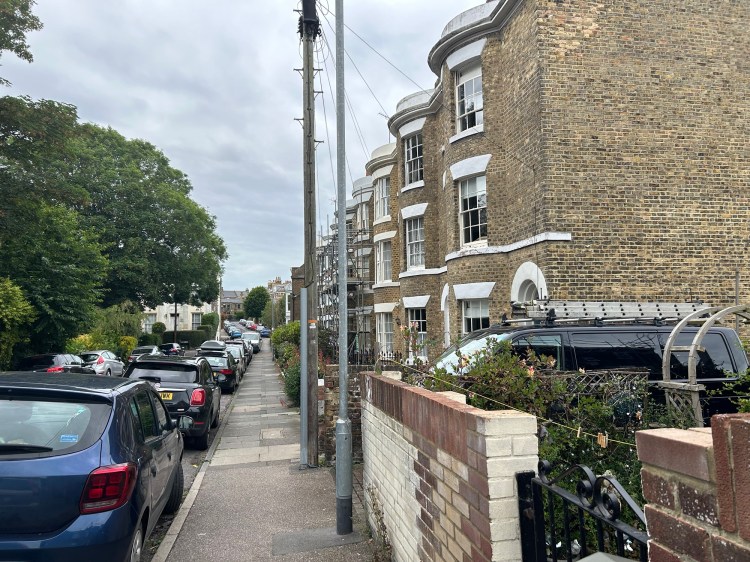
View of the Grade II listed No 1-9 Vale Square, Ramsgate showing full height bow windows
Common Problems
Cracking and settlement around bay windows are common issues, often caused by shallow foundations. In the 19th century, builders sometimes cut costs by using shallow foundations for bay windows. Consequently, these windows can shift and separate from the main structure, especially if they haven’t been securely anchored. Other potential problems include leaks at the roof and sill, sagging, heat loss, deterioration of sealants, foundation issues, and material degradation.
Conservation and Repair
Repairing bay windows involves several important steps, each tailored to the specific issues and materials involved. Begin with a thorough inspection to identify visible damage, such as cracks, rot, leaks, or broken glass, both on the interior and exterior of the bay. Look for signs of water ingress, which can lead to rot in wooden components or rust in metal parts. Check and repair flashing around the bay window to prevent water ingress. Ensure all joints and seams are properly sealed using appropriate sealants to prevent future water damage. If there is evidence of subsidence, it is important to consult a qualified structural engineer.
If your property is listed, you may require Listed Building Consent, so it is crucial to consult the local planning authority before carrying out such work. Unauthorised work on a listed building that normally requires Listed Building Consent is a criminal offence.
Author: Jeremy Fazzalaro BA (Hons) MSc IHBC ACIfA
Photos: Belong to author
Sources and Further Information
Hunt, R. and Suhr, M. (2023). Old House Handbook. Frances Lincoln.
Ian Alistair Rock and Macmillan, I.R. (2015). The Victorian & Edwardian house manual. Sparkford, Yeovil, Somerset, Uk: Haynes North America Inc.
Listed Building Consent – https://historicengland.org.uk/images-books/publications/listed-building-consent-advice-note-16/
 jfheritage.co.uk