


The Grange in Ramsgate was built by Augustus Welby Northmore Pugin (1812-52) who was one of the most prolific and influential architects of the 19th century. Pugin sought a return to the Gothic architectural style and was heavily influenced by medieval ecclesiastical architecture, which often included architectural features such as gothic tracery and inlaid tiles found on many sites. Pugin sought to revive medieval architecture and design in a movement called the Gothic Revival.
Pugin designed many churches, convents, houses, and schools, which were brought to life by builders. Notable examples include the Palace of Westminster and St. Augustine’s (see my blog post on encaustic tiles).

The Grange, built in 1843-44 and restored by the Landmark Trust, remains of significant historical and architectural interest, reflected in its Grade I listed status. The interiors were completed in 1850.
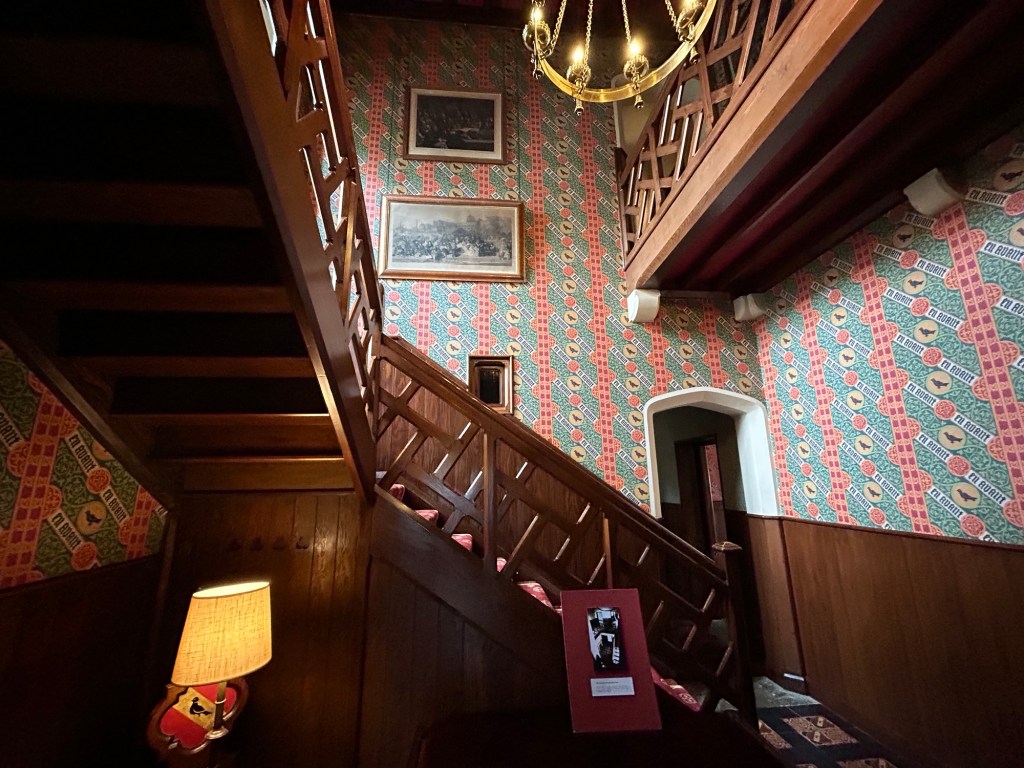
The wallpaper in the hallway features the En Avant design, reflecting Pugin’s family motto. The original floor tiles display the initials ‘AWP.’ The sitting room has been restored based on documentary evidence and includes a stained glass window depicting various saints. The fireplace in the sitting room has motifs representing each of Pugin’s children.
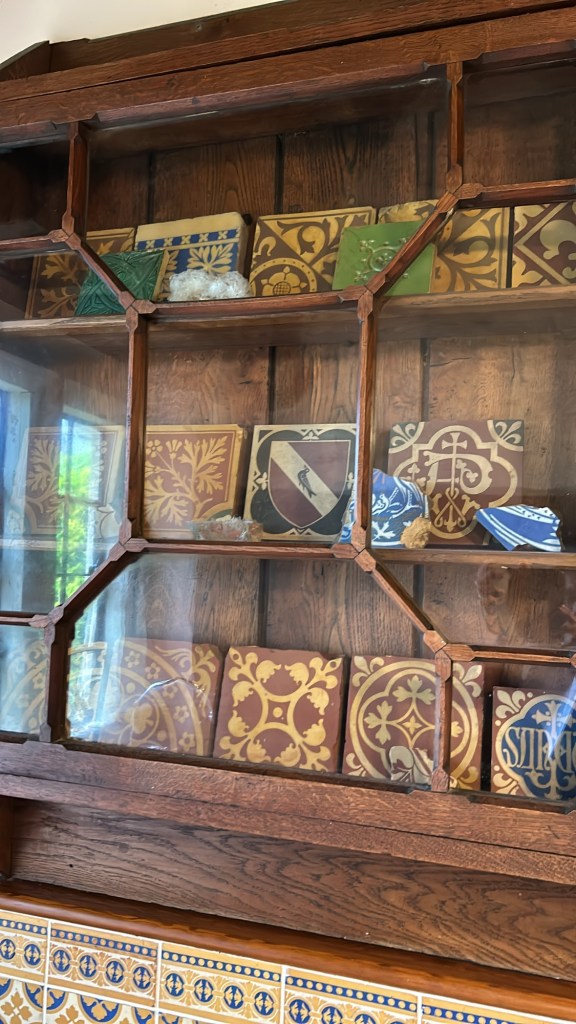
Pugin produced the majority of his work, including drawings, in his library. The library features a bay with stained glass windows, and the walls contain original matchboard paneling, as does the dining room. In 1840, a small private chapel was erected for the Pugin family. The chapel door, designed by Pugin himself, is of particular architectural interest.

Following Pugin’s death in 1852, the house passed to his family and faced the threat of development in the 20th century. While there are many conservation philosophies that could be discussed, I will focus on the key events. In 1997, the Landmark Trust rescued the building with a grant from the Heritage Lottery Fund. Further support for its repair and restoration (2004-2006) came from the Heritage Lottery Fund, English Heritage, Thanet District Council, charitable trusts, and numerous private individuals.

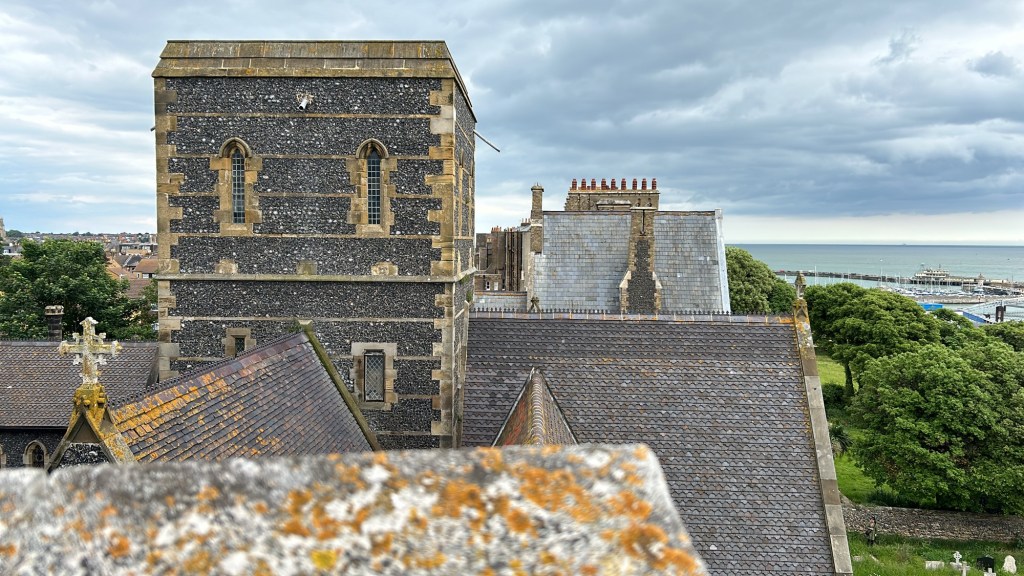
The Grange was reopened in 2006 after undergoing extensive repair and restoration work, including stone and brick repairs, woodwork restoration, and paint conservation. The Landmark Trust aimed to restore the building to its appearance in the 1840s based on documentary evidence.
In this brief introduction to The Grange, I have given an overview of its significance. Many others have written about the architecture and conservation of this important heritage asset. Various books, notably Rosemary Hill’s work on Pugin, along with other sources such as the Landmark Trust, have been utilised, in addition to a site visit.
Author: Jeremy Fazzalaro
Photos: All photos belong to author
Further sources and Recommended Reading
Landmark Trust
Hill. R (2009) God’s architect: Pugin and the building of romantic Britain Rosemary Hill
 jfheritage.co.uk