
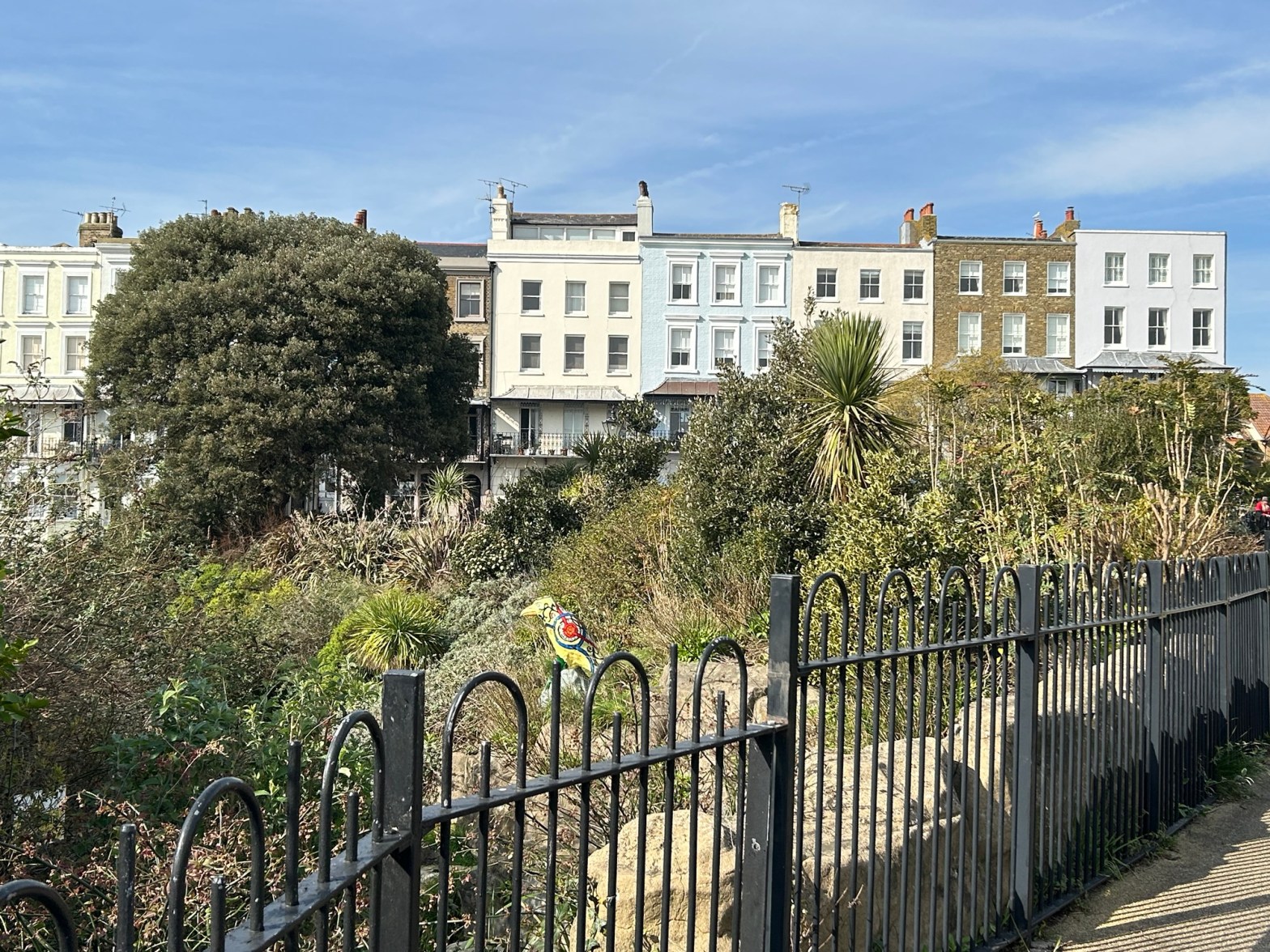
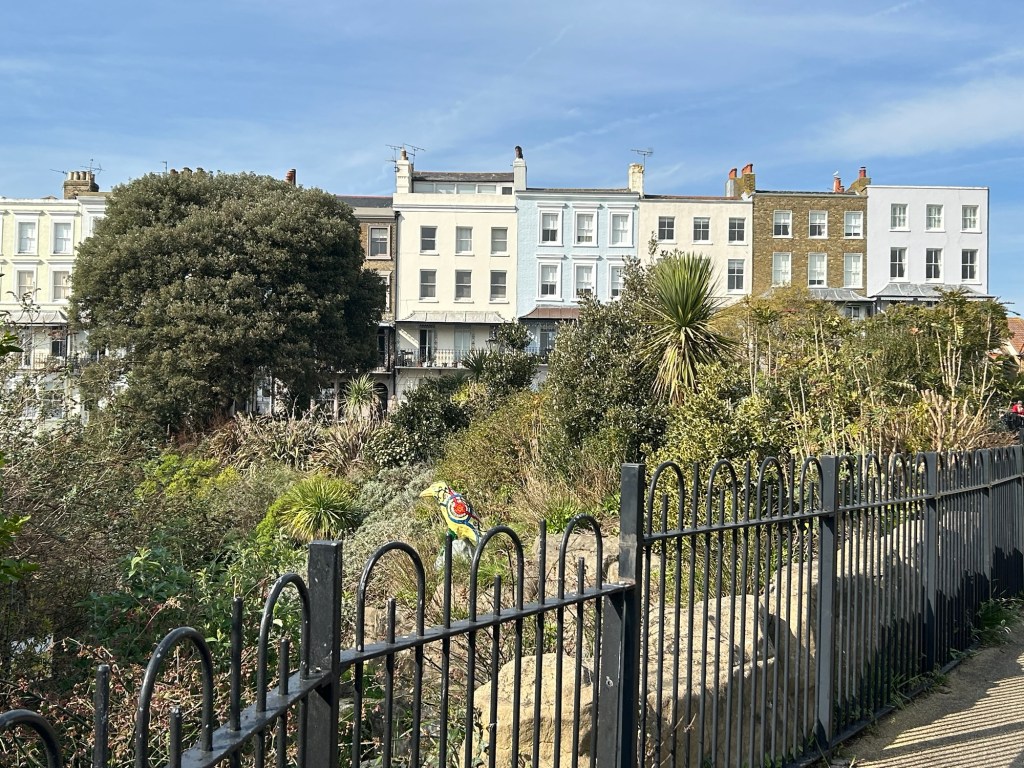
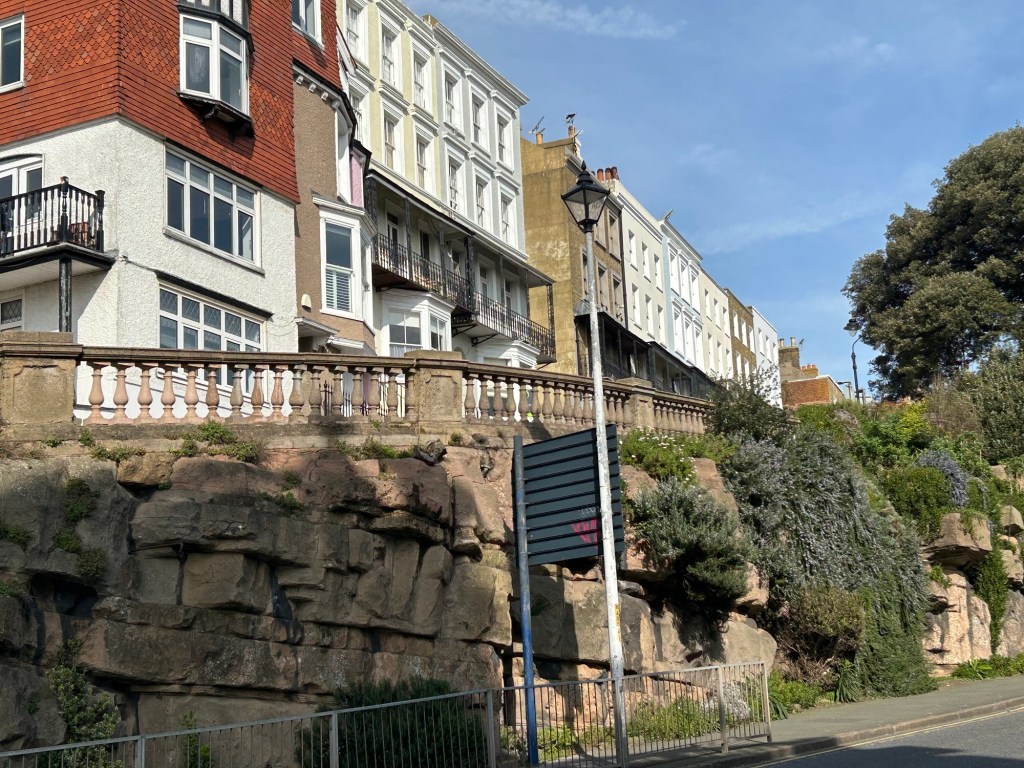
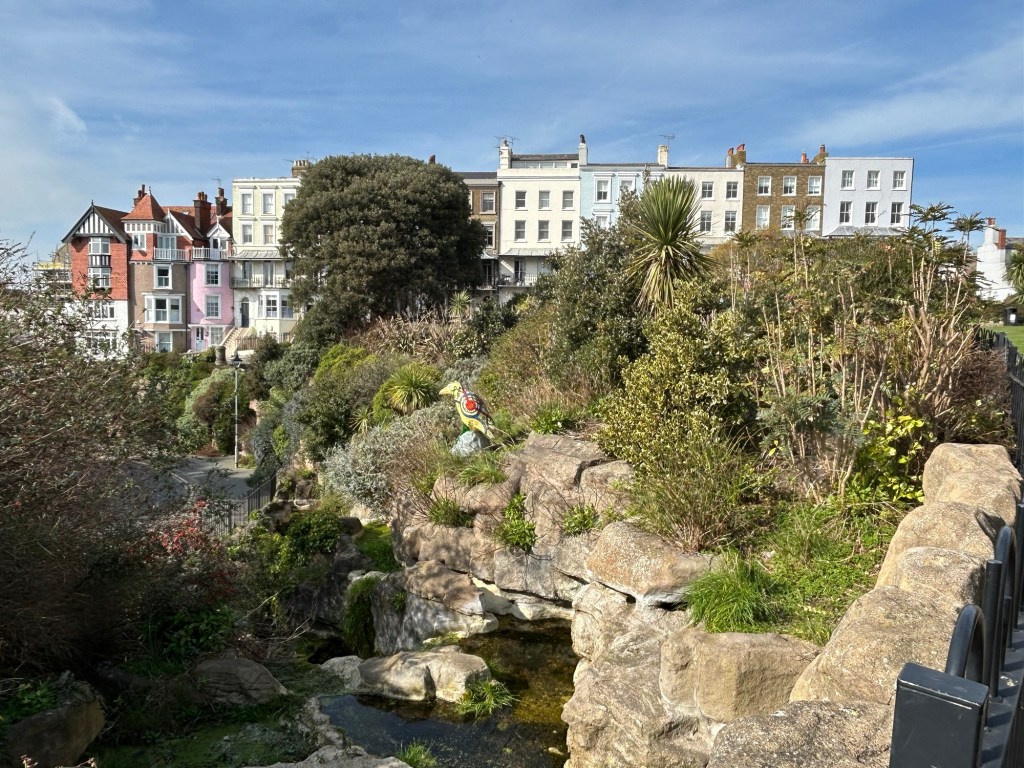
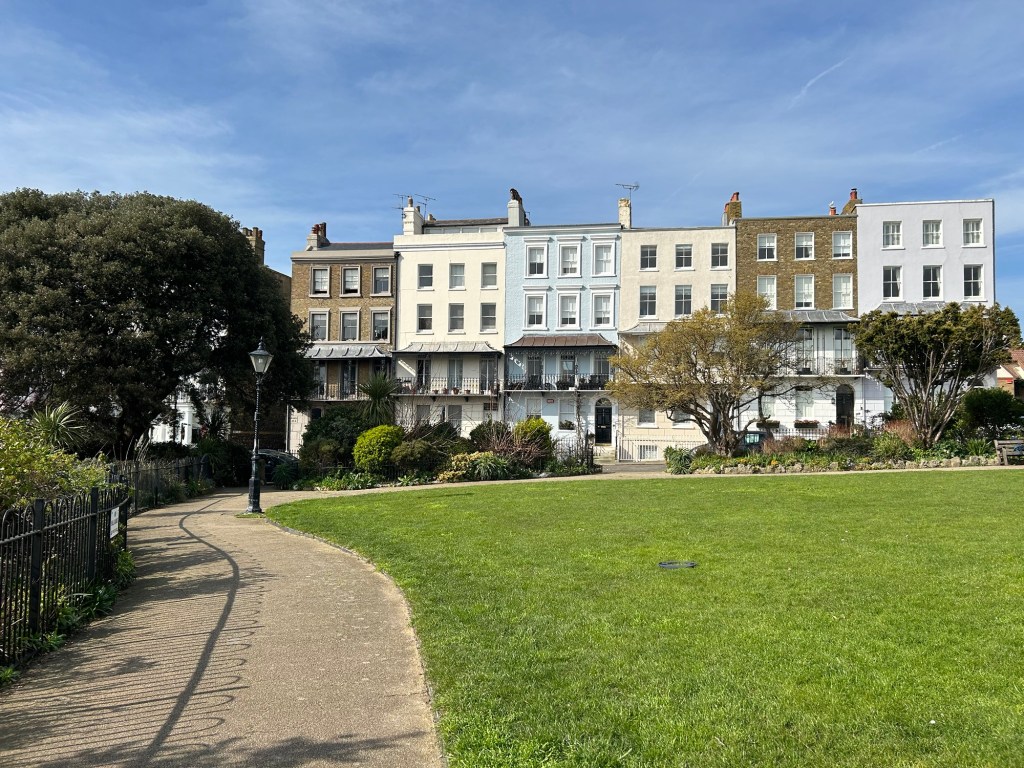
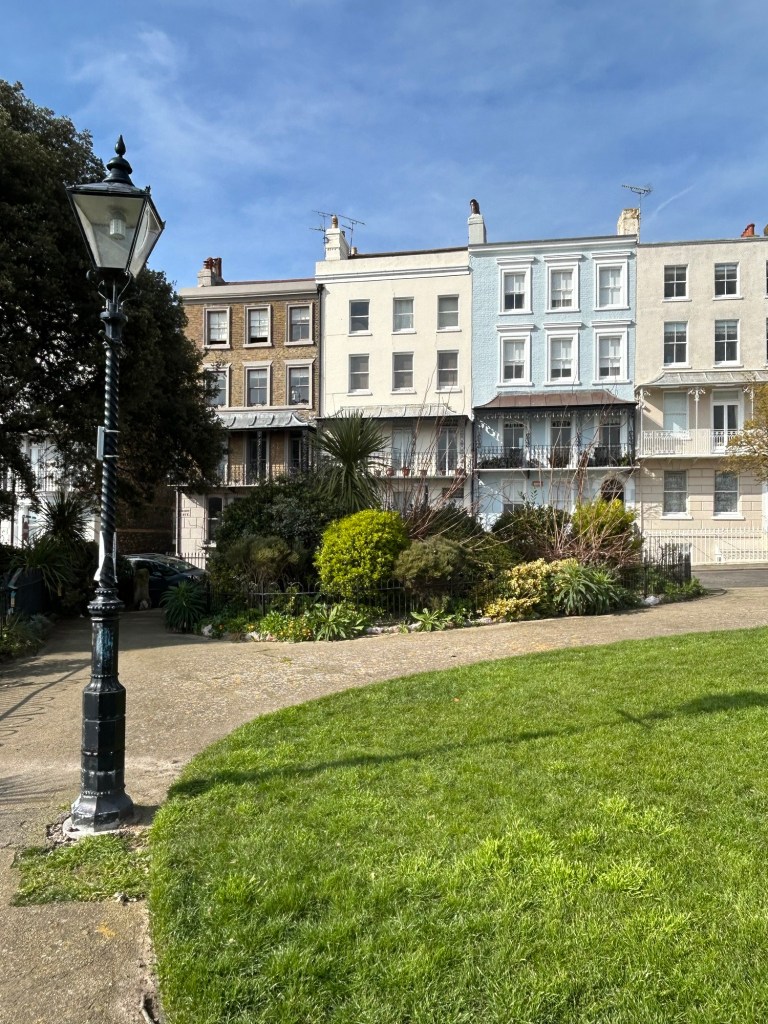
Albion Place Gardens is a Grade II Registered Park and Garden that lies in the centre of Ramsgate on the cliffs above the harbour. Dating from the early 19th century altered and embellished in the late 19th century along its southern boundary, the gardens have impressive Pulhamite rock work. The enclosing terraces (nos 1-6, 10-15, and Albion House) are listed grade II.
Albion Place has been a focal point of Ramsgate’s narrative for centuries. Originally developed during the 18th century, Albion Place emerged as part of Ramsgate’s expansion during the Georgian era. Its strategic location near the bustling harbor made it a hub for merchants, sailors, and artisans alike. The area flourished as a vibrant center of trade, with bustling markets and lively taverns lining its cobbled streets.
However, Albion Place truly came into its own during the 19th century when Ramsgate experienced a tourism boom. The town became a fashionable destination for Victorian holidaymakers seeking respite by the sea. Albion Place underwent a transformation, with elegant townhouses and grand hotels springing up to accommodate the influx of visitors. Its picturesque promenade became a popular spot for leisurely strolls, offering panoramic views of the English Channel.

Throughout its history, Albion Place has witnessed moments of both triumph and tribulation. During World War II, the town endured heavy bombardment as it played a crucial role in the defense of Britain’s southeastern coast. The scars of war are still visible in some of Albion Place’s historic buildings.
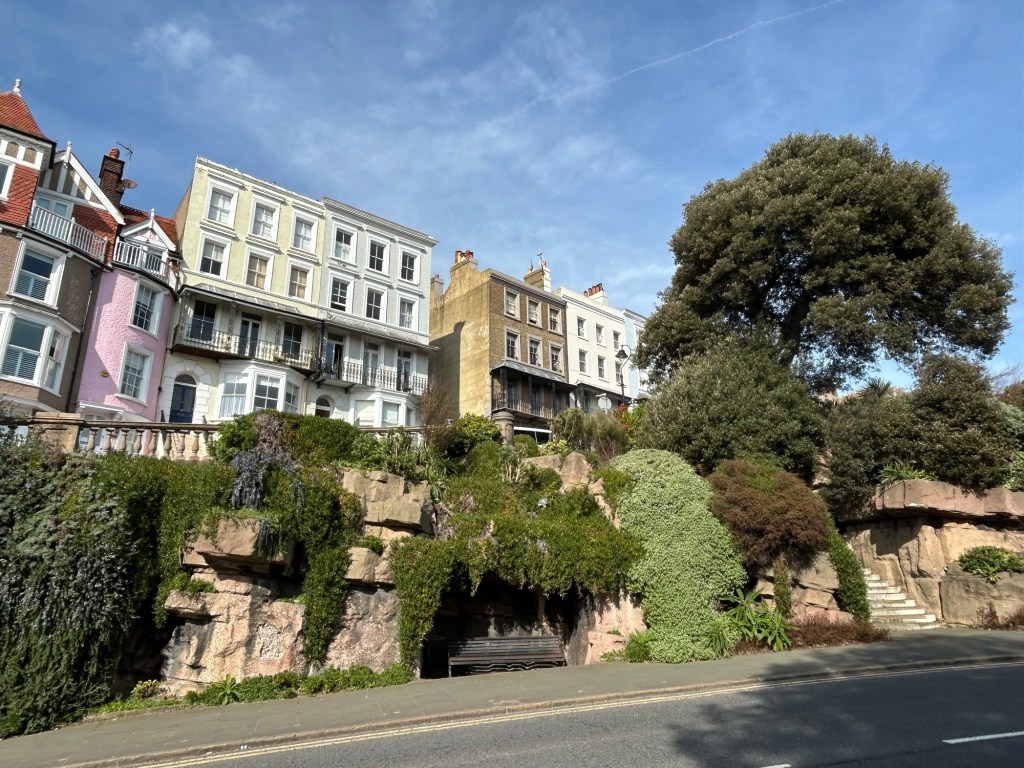
Near to Albion Place lies the Pulhamite Rock gardens, a unique geological feature that adds to the area’s appeal. Pulhamite is a type of artificial rock made from a mixture of natural materials, including cement, sand, and pulverized stone. In the 19th century, the Pulhamite Company specialized in creating ornamental rockwork for gardens, parks, and public spaces, and their creations can be found across England.
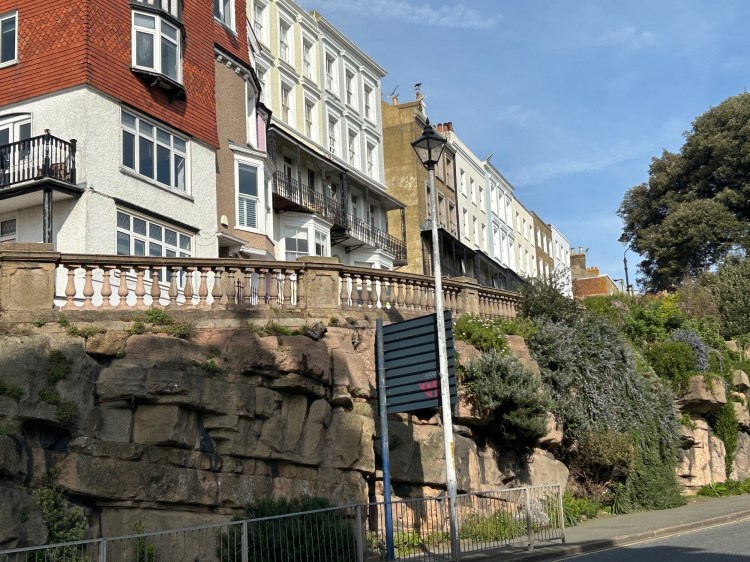
The Georgian and Victorian terraces surrounding the gardens and clearly of historic and architectural interest. Princess Victoria stayed at Albion Place for several months in the early 19th century and Jane Austen referred to it in Mansfield Park, the association with these famous people adds to the historic interest of Albion Place Gardens.
Author: Jeremy Fazzalaro
All photos belong to author
All views my own.




 jfheritage.co.uk