

Encaustic tiles have captured my interest for some time now. Found in numerous locations throughout England, they adorn floors and walls with intricate patterns and vibrant colors. Notable examples of these tiles can be found at St Augustine’s in Ramsgate and the Houses of Parliament. Here, they not only serve as decorative elements but also stand as a testament to the craftsmanship and artistry of the Victorian era.
What are Encaustic tiles?
Encaustic tiles are ceramic tiles in which the pattern or design is not a product of the glaze but instead of different colors of clay. They are made by pressing designs into the surface of the tile, typically using different colored clays. The tiles are then fired, resulting in a durable and decorative surface suitable for floors, walls, and other applications. Encaustic tiles have been used for centuries and are known for their intricate patterns and vibrant colors.
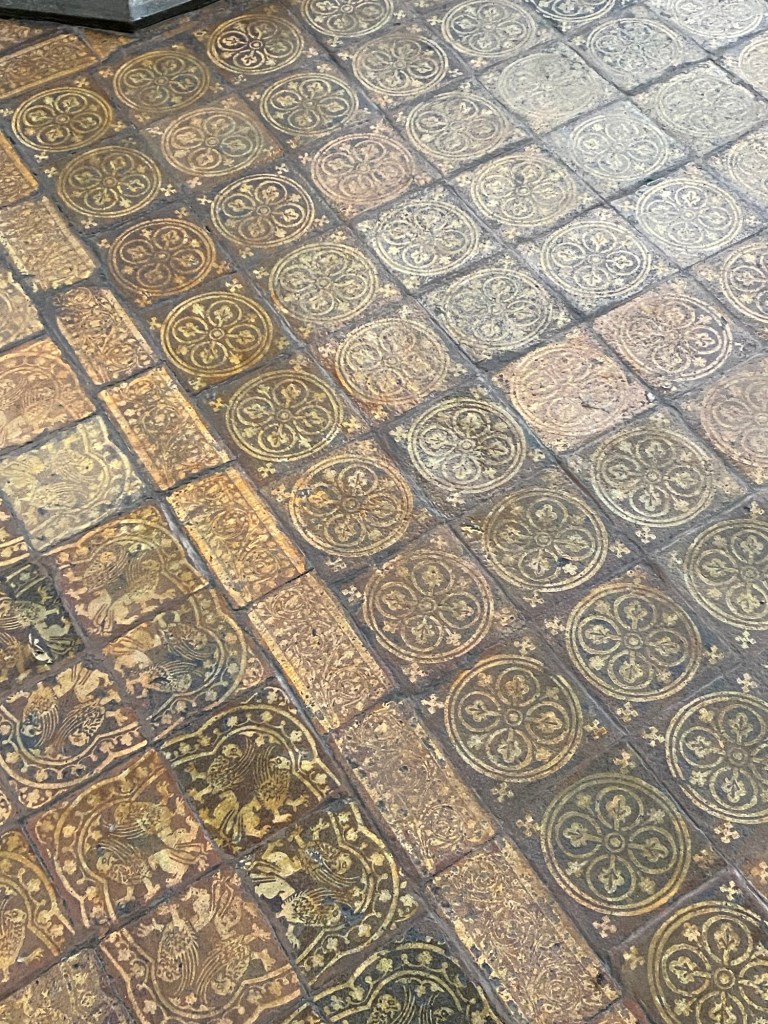
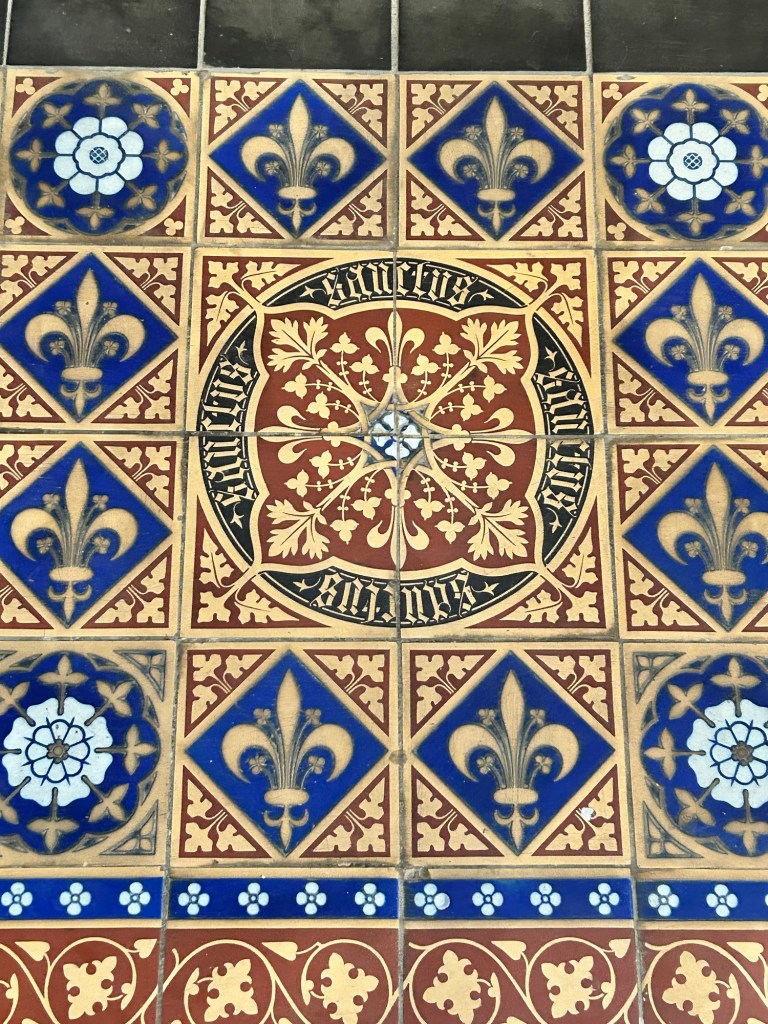

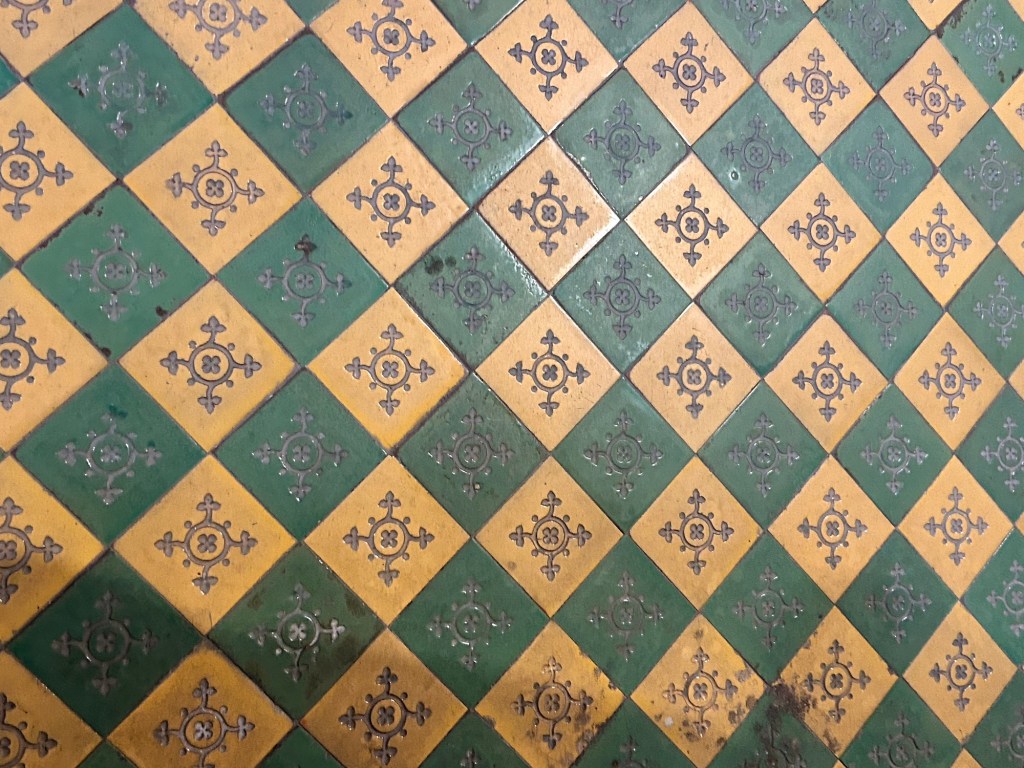

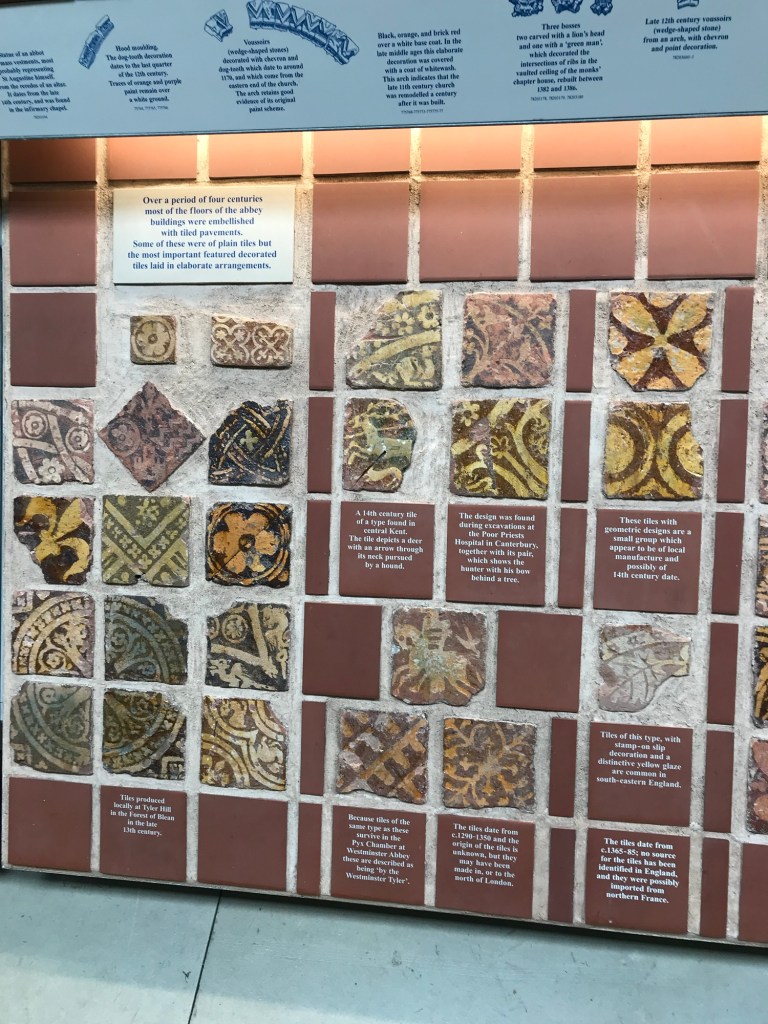
Examples of tiles, from left to right, include medieval tiles at Canterbury Cathedral, tiles at St. Augustine’s, Ramsgate, and finally medieval tiles on display at St. Augustine’s Abbey, Canterbury
Historic development
What we know as encaustic tiles developed from the medieval inlaid tiles common in ecclesiastical buildings, such as churches, cathedrals, and monasteries. Inlaid tiles became common between the 13th and 16th centuries until the dissolution of the monasteries in the mid-16th century caused the destruction of monasteries and many religious establishments. Early examples of medieval tiles can be observed both in situ and at the visitor center at St Augustine’s Abbey, Canterbury, which the author had the pleasure of viewing while volunteering at the site. There are, of course, other examples elsewhere in England.
It was not until the 19th century during the Gothic Revival period when architects such as August Welby Pugin sought a return to the Gothic style and were heavily influenced by medieval ecclesiastical architecture, including inlaid tiles found on many sites. These tiles were commonly found in churches and in some instances private properties. The term ‘encaustic’ is, in fact, a 19th-century invention. The tiles were eventually mass-produced and made available to the public. By the 1930s, the availability of cheaper glass tiles became incredibly popular, and encaustic tiles declined in popularity.
One of the major manufacturers of encaustic tiles in the mid to late 19th century was Mintons, a major company in Staffordshire pottery and the leading ceramic factory during the 19th century also deploying examples at the Great Exhibition. Minton tiles ceased trading in the 1960s, and when repairs to tiles are required, newer tiles often do not match the quality of the original Minton tiles. Notable examples of Minton encaustic floor tiles are at St Augustine’s, Ramsgate, where tiles emblazoned with Pugin’s arms and monogram are visible in the Pugin Chantry near the tomb of Pugin himself. The Grange, designed by Pugin, also has examples of Minton tiles, and indeed there are many elsewhere not mentioned here.
Conservation and Repair
Inevitably, all tiles gradually erode due to wear and tear. Historic England has produced informative guidance on the repair and conservation of tiles. Encaustic tiles continue to captivate contemporary designers and homeowners alike.
Author: Jeremy Fazzalaro
Bibliography and Further Reading
https://www.buildingconservation.com/articles/encaustic-tiles/encaustic-tiles.htm
https://historicengland.org.uk/listing/the-list/list-entry/1221093
 jfheritage.co.uk