
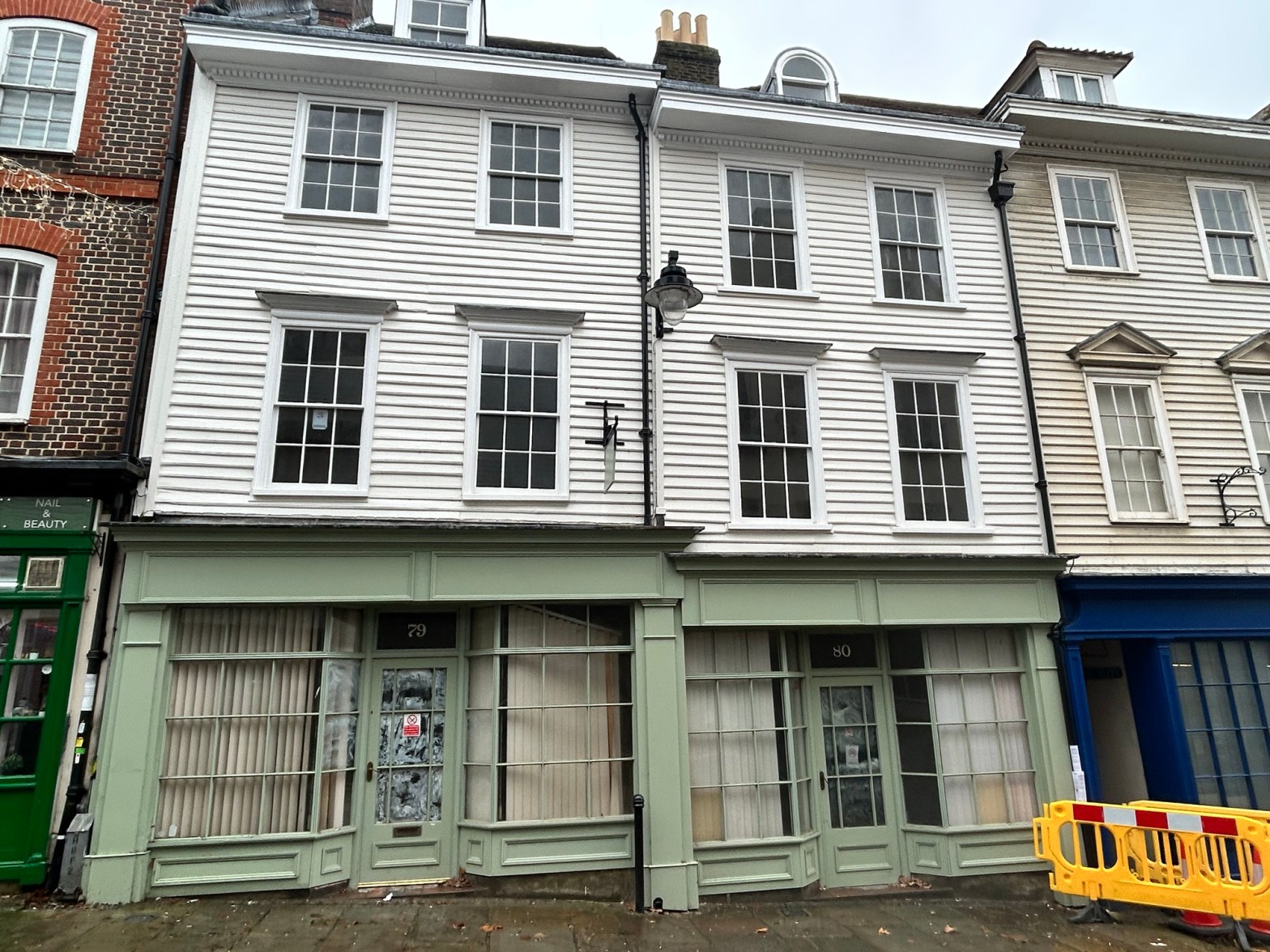
Heritage House is a Grade II* listed building dating from the early to mid-18th century. The property is weatherboarded with a tiled roof, dormer windows, and cornices. The property has a modern shopfront and is located within the High Street and Queen Street Conservation Area. Gravesend, situated east of central London, is a sizable town encompassing residential, commercial, and industrial districts. Historically, its significance stemmed from being the initial stop down the Thames from London. A fire in 1727 devastated much of the old town, yet in the early 19th century, the town experienced growth, marked by the construction of new buildings, including a town hall and piers.
Gravesend’s maritime importance expanded during the 17th and 18th centuries. High Street became a bustling thoroughfare, lined with merchant houses, inns, and establishments catering to sailors and traders. The architecture of this period, with its distinctive Georgian style, contributed to the street’s character. The advent of the Industrial Revolution brought about changes in High Street. Increased trade and industrial activities influenced the architecture, with some buildings undergoing renovations to accommodate the evolving economic
landscape. Warehouses and businesses associated with maritime trade flourished.
The earliest map consulted is the OS 1871-1890 map of Gravesend, revealing tightly packed streets. Historically, since the Early Medieval period, the High Street has served as a significant route toward the Thames and Watling Street. The closely packed plots bear resemblance to medieval burgage plots, although much of the town suffered damage from several fires in the 18th century. The map depicts various piers, attesting to Gravesend’s bustling activity in the 19th century. A vibrant High Street is illustrated, adorned with public houses, hotels, and a flourishing commercial quarter along the waterfront.
Heritage House is a three storey weatherboarded dwelling dating with a pitched roof and tiled roof. The frontage is clad with weatherboarded, a common feature of buildings in Kent during the 18th century. The front elevation has 6-over-6 sashes painted in white on the first and
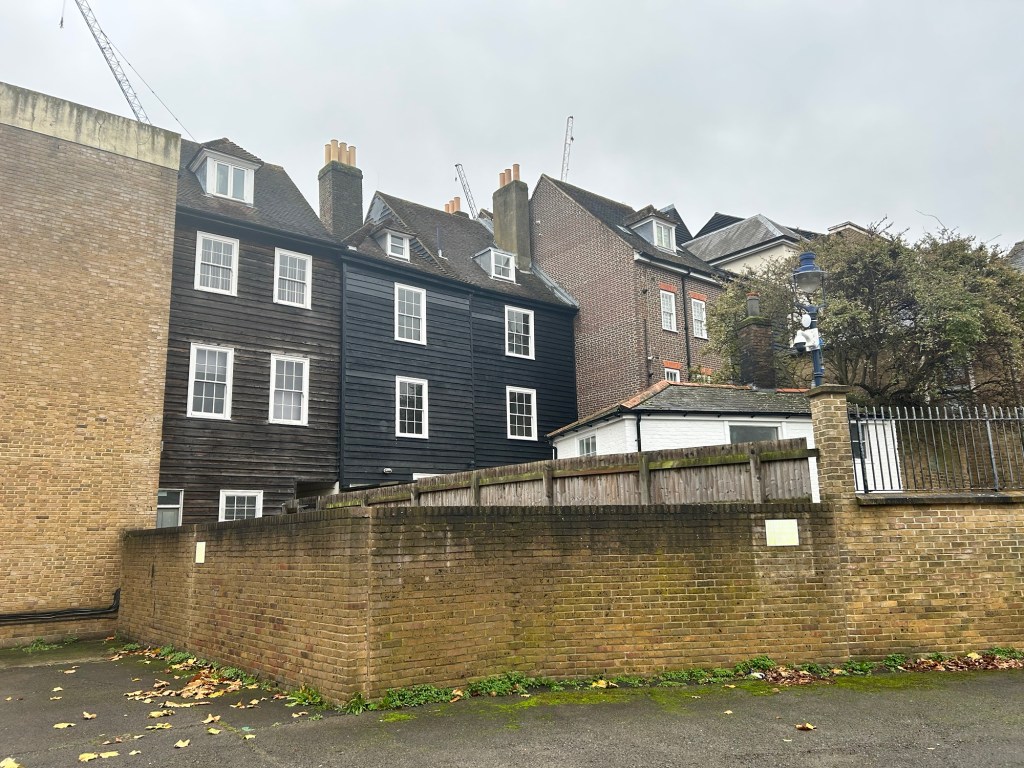
second floors, painted in white with two dormers at roof level. The list description describes the ground floor shopfront as modern and it also makes a positive contribution to the character of the building. In contrast to the front, the rear has black weatherboarding with timber sashes and doors, these features add the charm and architectural interest of the building.
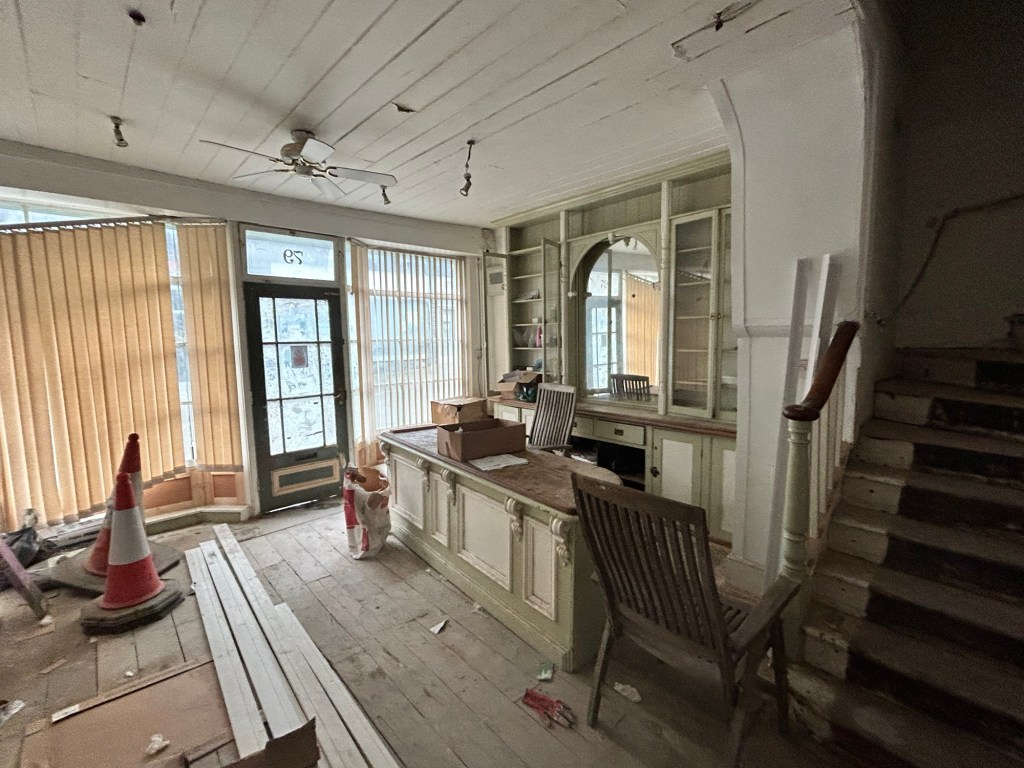
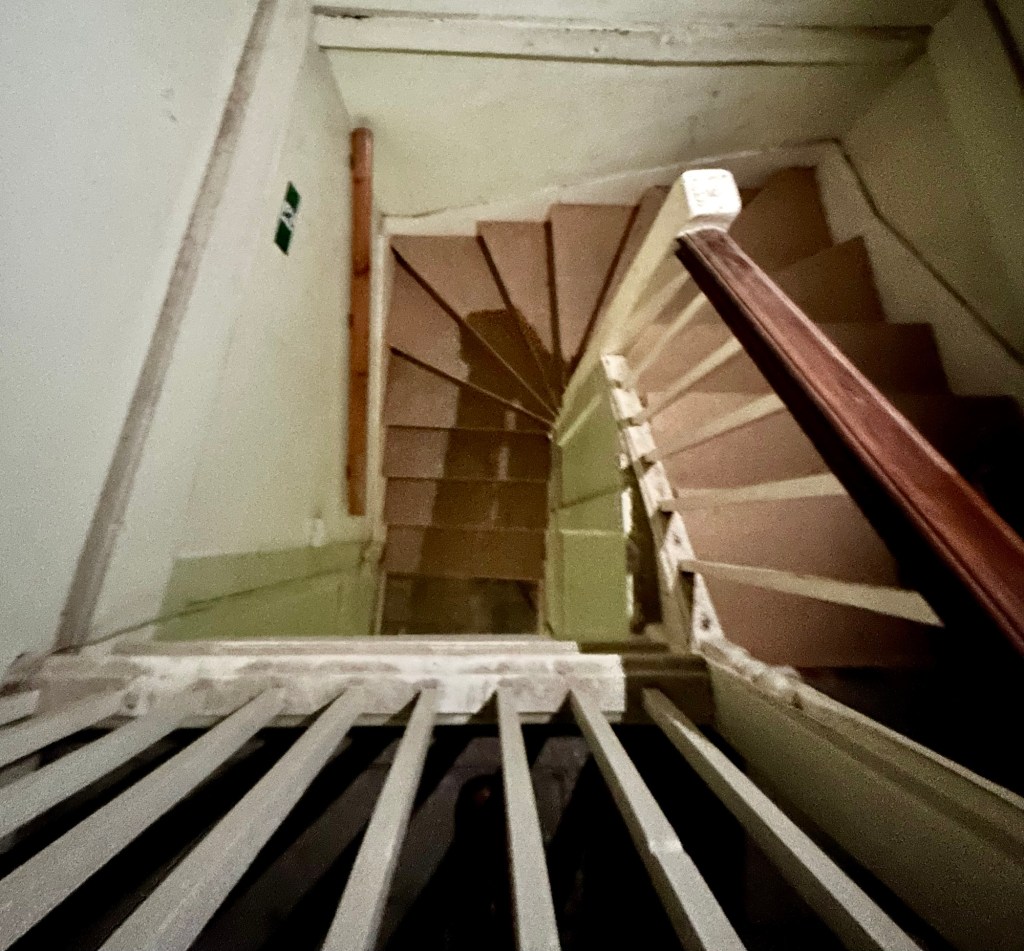
Turning to the interior, the ground floor has been altered, however the shop fittings including the counter has interesting classical details, it is unclear how old these features are but given the recent alterations are not original. The timber staircase is an interesting feature typical of the period and makes a positive contribution to the character of the building. The timber doors do not appear to be original and were likely inserted later. Moving to the first floor, some of the ceilings have been replaced and, coving and panelling altered to accommodate services. These later modern additions hold little architectural interest. However, there a several fireplaces that remain with original features such as tiles, and grills that hold a small degree of architectural interest.
Moving to the roof level, the attic has been altered with the original floor removed and an insertion of a dormer window with timber casement, while not detracting from the buildings interest, this feature is of neutral interest in that it is of traditional design but likely to have been inserted at a later date, probably at some point in the 20th century.Despite modern alterations, including modern partitions, carried out during and after the conversion to retail/office space in the 1980s, the original plan form of both buildings is discernible. The front, rear, ground and first floor of the property showcases much of its
architectural interest, with important architectural features such as the timber sash windows, fireplaces, timber panelling, timber weatherboarding, modern shopfront and internal fixtures and fittings being of interesting adding to the buildings architectural appeal.
Author: Jeremy Fazzalaro
All photos belong to author.
 jfheritage.co.uk