

J F Heritage has submitted a heritage statement and detailed conservation advice for works to the Grade II listed Tickerage Mill Barn and cart shed in Sussex. Tickerage Mill Barn stands as a notable example of a 17th-century former threshing barn. Despite some alterations, its original plan form remains discernible. The 17th-century timber frame, crafted from high-quality timber, has endured the test of time. The barn, featuring a half-hipped design and a catslide roof to the south and west, showcases a characteristic found in agricultural buildings of its era. Several key features contribute to its architectural significance, including weather-boarding, limestone foundations, mixed-stock brick, a clay-tile roof, and traditional timber and metal windows.
These materials not only reflect the barn’s historical authenticity but also enhance its architectural appeal, adding to its special interest. Of particular note is the original central cart entrance, which has been preserved, now with a metal-framed glazed door. Recent alterations in the 21st century introduced glazed panels, seamlessly integrating modern elements while preserving the barn’s timeless charm.
Turning to the interior, the oak timber frame is exposed allowing the visitor to fully appreciate the scale and construction of the barn. A detailed survey of the barn was carried out and has revealed some of the existing timbers are composed of an earlier timber frame dating from the 17th century. The existing roof and tie beams are the key features of the interior and are of a high level of architectural interest.
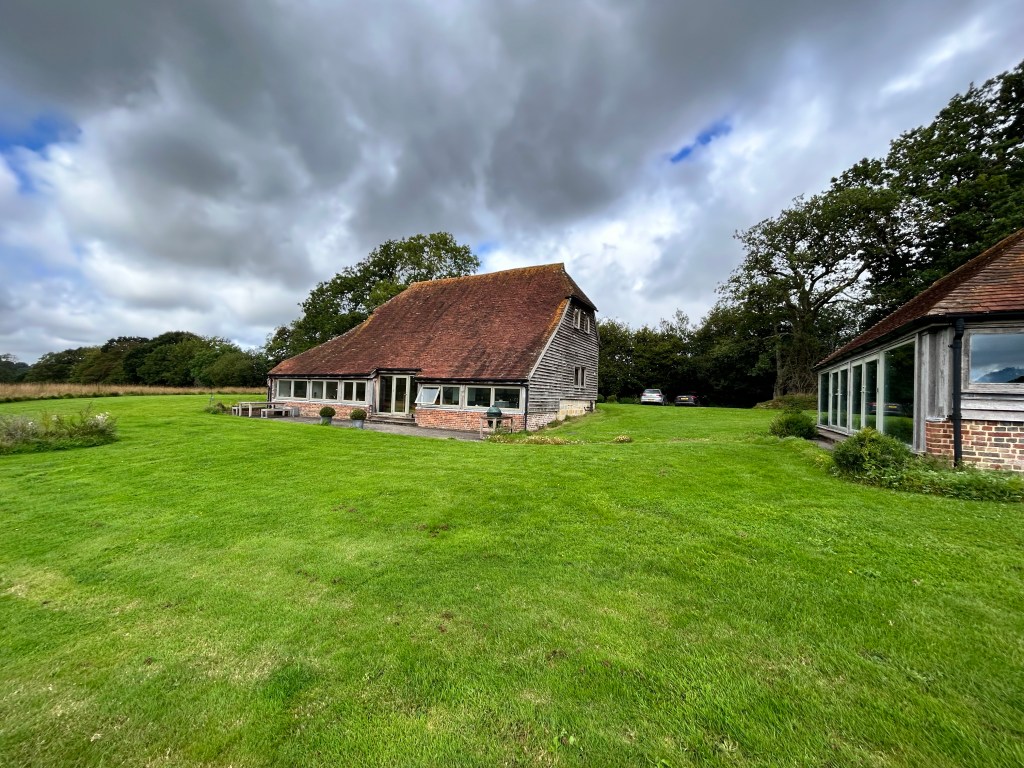
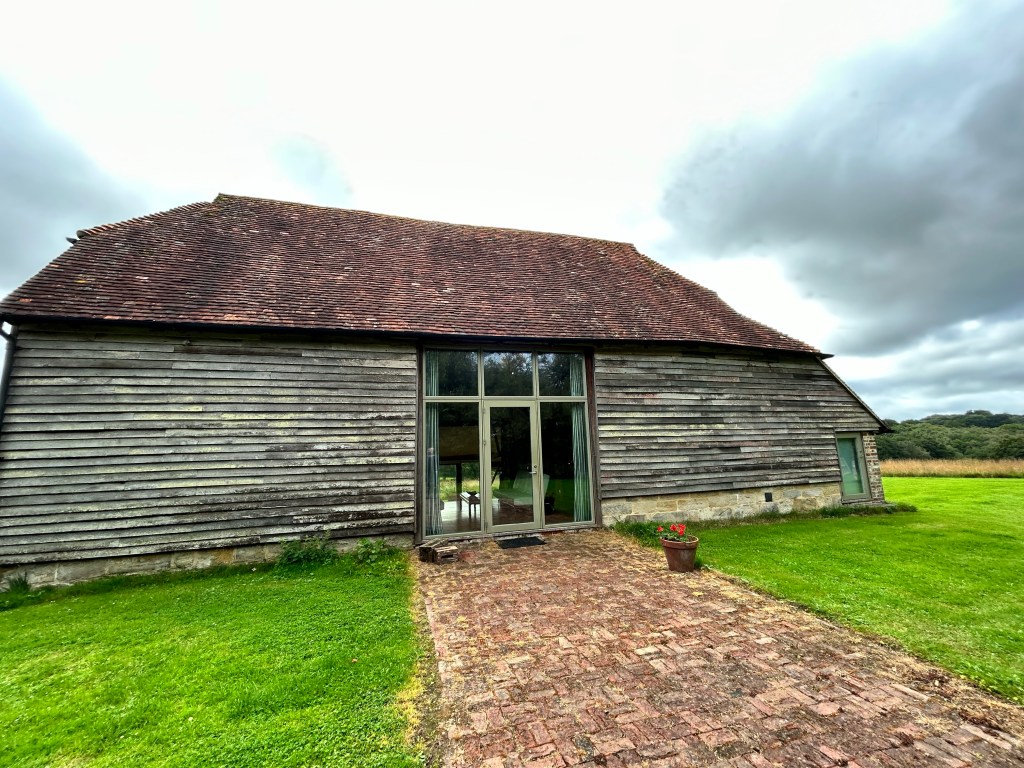
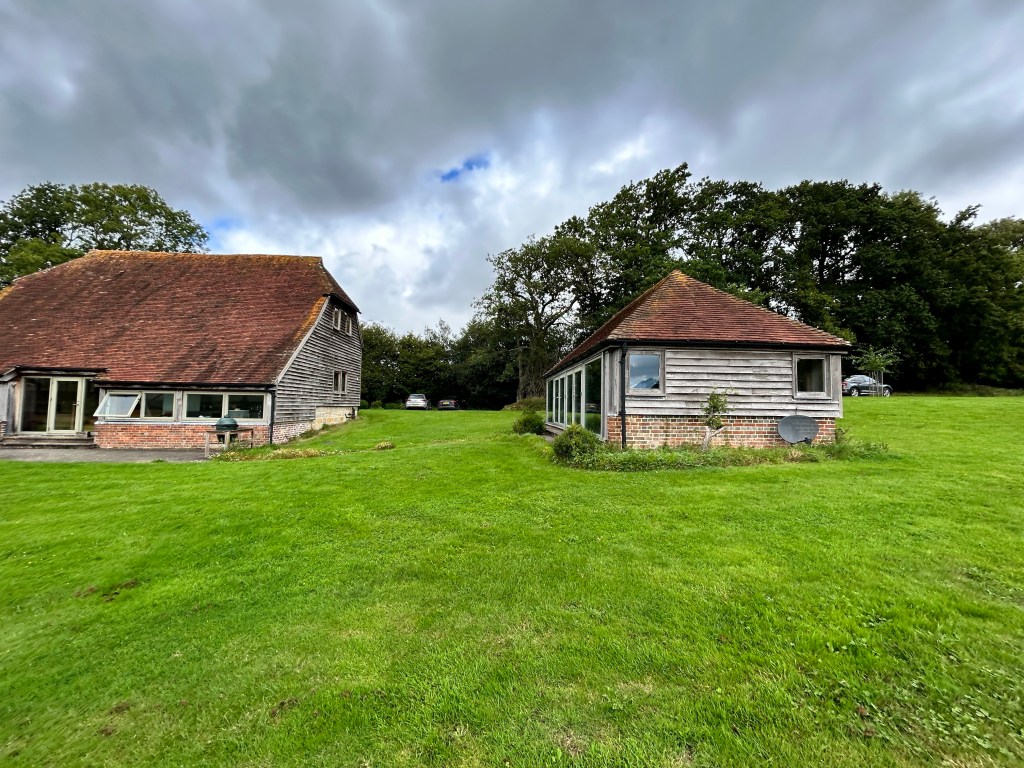
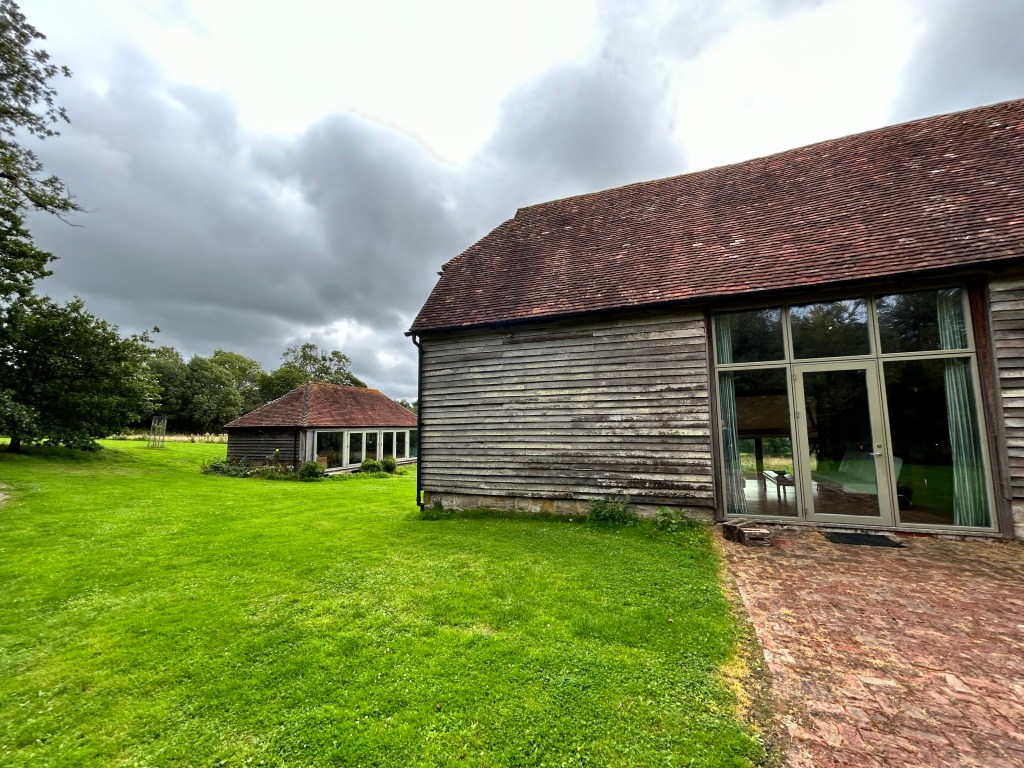

In 2003, an Archaeological Interpretative Survey of the Isolated Barn at Tickerage in Framfield, East Sussex, shed light on its historical roots. The barn dates back to the late 17th century, while the outshuts were added in the early 19th century. The structural similarities, particularly the presence of jowled main posts, indicate that both structures share a late 17th-century origin.
These buildings, featured on 19th-century historic maps, maintain a footprint similar to their present layout. The barn likely served one of the nearby structures – Tickerage Mill, Hundred House, or Tickerage Castle, adding depth to its historical significance. The presence of older structural timbers and ashlar-faced stone foundations suggests the barn incorporates recycled materials, further enriching its historical value.
While both the barn and cart shed have undergone sensitive residential conversion, their original plan form and agricultural heritage remain distinguishable. Serving as visible reminders of the region’s agricultural importance, these structures, due to their age, association with other historic buildings, and their role in showcasing the local economy’s history, hold a significant level of historical interest. A comprehensive search was conducted on the Historic Environment Record, revealing no documented archaeological findings within the immediate vicinity.
The significance of a heritage asset is greatly influenced by its surrounding setting, and it is crucial to take this into consideration. In the case of Tickerage Mill Barn and cart shed, their immediate setting encompasses the garden area. Both buildings can be observed from the surrounding countryside. The historical map regression reveals that the landscape has undergone minimal changes since the late 19th century, allowing for the continued appreciation of the buildings and their rural surroundings. The garden area provides vantage points that offer views of the main house, thus contributing to the overall significance of Tickerage Mill Barn and cart shed by emphasizing their contextual relationship and enhancing their historical value. The topography allows for long views of the countryside and due to its location both barns are visible from the surrounding fields, the fields are bounded by trees to the south east and hedges to the north, views of the buildings are possible from the bottom of the slope, this view in particular is of a low level of importance and allows for the appreciation of the buildings in their rural landscape.
Author: Jeremy Fazzalaro
Photos: All photos belong to the author
 jfheritage.co.uk