
Oast houses are among the most noticeable structures in rural areas, especially in Kent, where the hop industry thrived for the majority of the 19th century. What were oast houses used for, how did they come to be, how can they be sensitively modified for contemporary use, and how can we save them for future generations? I will delve more into these issues in this post.
There are five main functions associated with oast houses, these are:
1) To receive the hops
2) To dry them in the kiln
3) To provide space for cooling
4) To provide facilities for pressing them into bags
5) To provide storage space for the bags (also known as pockets) until they were sent to market.
Oasts are generally divided into two areas: a) the kiln or kilns where the hops would be dried, and b) The stowage where the hops would be received. Following the drying process they would cooled, pressed or bagged and stored.
Early Oast Houses in England Throughout the 16th century, hop levels increased as a consequence of the introduction of beer production. According to Robertsbridge Abbey Farm records, hops were purchased for the brewing of the employees’ beer in 1542. (Jones and Bell, 11, 1992)
Reynolds Scot published a text called ‘ A PERFITE PLATFORM OF A HOPPE GARDEN he called a ‘a common oste’ was not enough and only a purpose built oasthouse would do. Although he preferred brick because it posed less of a fire risk, his design called for a timber-framed structure with three distinct rooms, the largest of which was the kiln. The kiln was located in the middle of the ground floor and was walled off into a “close, square room,” with a furnace made of honeycombed brickwork in the centre. On one side of the kiln, in the two rooms, there would be green hops, and on the other, dried hops. They may have been left unfloored since there is no evidence they were floored. Just above the drying floor, a small opening was built so that hops could be thrown down below for preparation.
There is limited information available regarding the roofs of these early structures and we must assume hot air passed out through a window or an opening in the roof. Few early oasthouses survive from the 17th century, perhaps as Jones and Bell speculate, they became too small or fortunes changed. However, an oast in Hawkhurst, Kent has survived. It consists of a large barn with a kiln at one end, which has been dated by its construction to late 16th or early 17th century, but unlike Scot’s larger kiln, there was no separate room for the receiving of the hops
What is evident from the available sources and surviving examples is that while the size of the buildings and kilns increased, there are variations in terms of plan form with some cooling floors omitted, possibly for economic reasons. As the 17th century progressed, more farmers and wealthier tenants invested increasingly more in hops.
Larger buildings became necessary as hop acreages in significant hop-growing regions were increased. An oast house near Lamberhurst, known to have been constructed around 1750, is one example of this. Records demonstrate the extent of the growth that had occurred in some regions by the first part of the 17th century. The structure was constructed in the same style of the oasthouses that we have seen throughout the 17th century, with a timber frame and a tiled roof. The structure had a “T” shape, with the kiln at the top and had a central chimney at the ridge. Due to how convenient loading was, this design seems to have gained popularity in the 18th century.
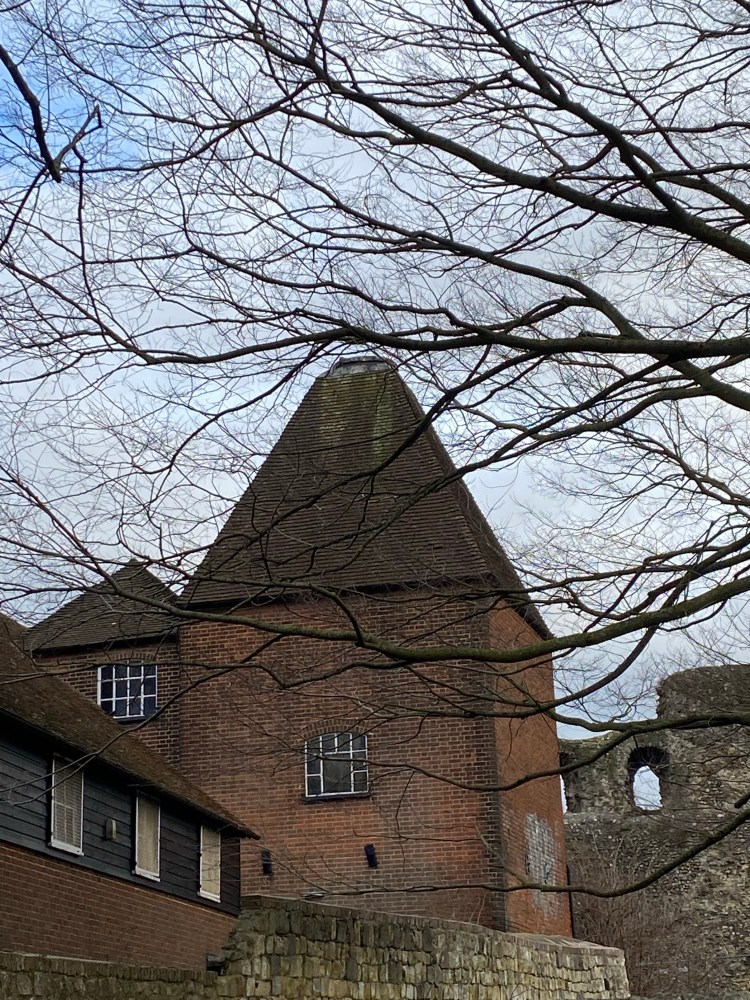
A typical square kiln near Canterbury Castle
To keep the hops clean, the floors were lined with boards, and the windows had shutters to stop draughts. While many of the local hop buildings underwent design alterations, not all C18 oast houses did. Much depended on how successful the market was at any particular period.
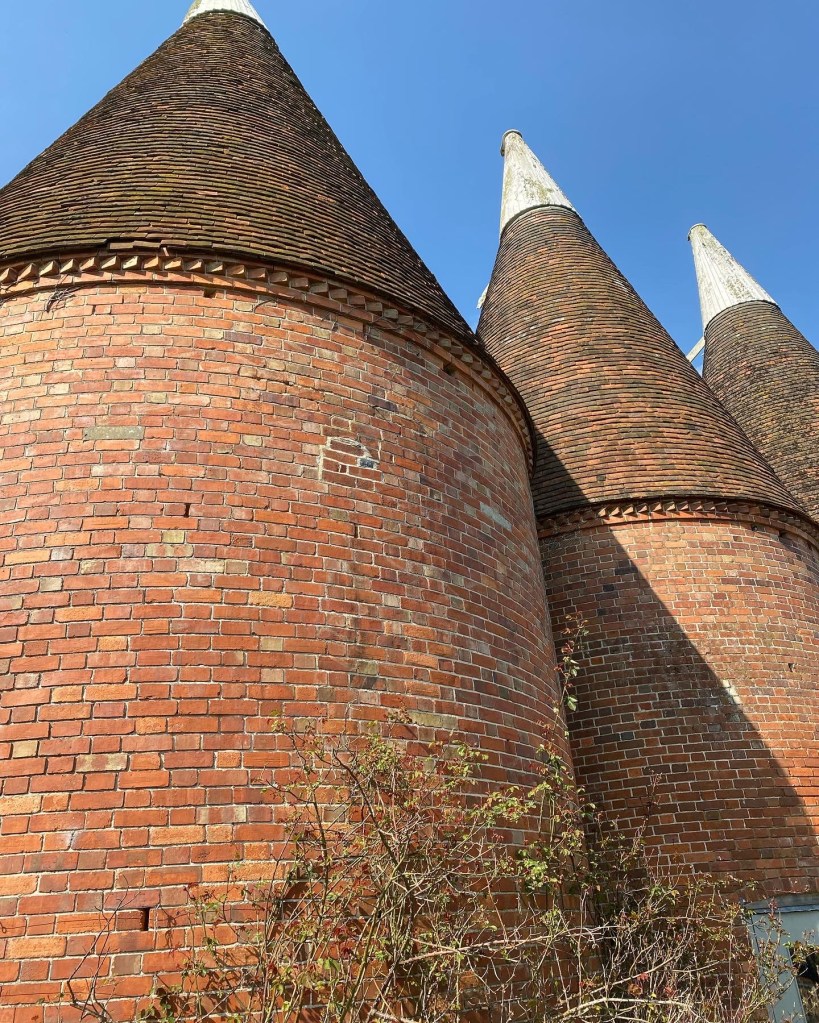
The Nineteenth century The necessity to boost production towards the end of the 18th century had prompted experiments with bigger kilns, but these presented difficulties with hop drying. Further testing was conducted, and in 1796 John Read of Horsmonden perfected a system that originated from the early stages and from the heating used in greenhouses. He adopted a new circular form and came up with a complex plan for carrying heated air up towards the drying floor, offering strength, being more cost-effective, and creating more space. These new kilns’ conical shape quickly gained popularity, and today you can still see them all across Kent.
While the new conical form was used by the majority of the larger hop growers, the smaller hop growers often only copied the shape of the rounded form and retained traditional open grates or used the new technology of the kilns but added them to existing stowages instead. Roundels in Kent were built up until the end of the 19th century, with a few built in the early 20th century. The square kiln developed separately from the more common conical roundal and in some cases replaced the traditional circular kiln.

The stowage
By the end of the 19th century the hop industry was in decline due part from a rise in cheap hops in America, poor harvests and for a preference for lighter beers to which the English Hops were unsuitable and this combined with a lack of support from the government, particularly in the 20th century resulted in the closure of many kilns.
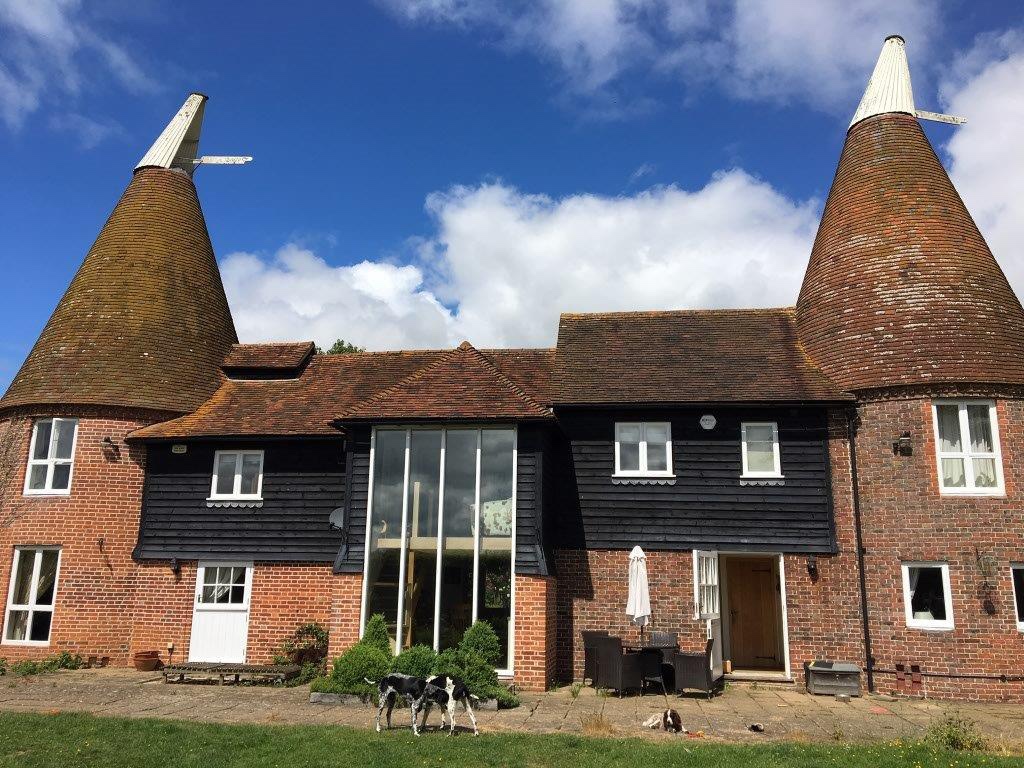
Adaptive Reuse of Oast Houses The initial step when considering the reuse of oast houses is to understand its significance, having a full understanding of a building historic development, fabric and craftsmanship is imperative before any consideration is given to further works as this allows the owner/applicant to consider what areas can be altered without damaging the character and significance of the building. As discussed above, while there are similarities between oast houses there are often slight differences in design and therefore each case should be assessed on a case by case basis. It is often useful to consult heritage professionals such as the local planning authority conservation officer or heritage consultant at the earliest stage in order to ensure any design is sensitive to the character of the building.
The main issues relating to the adaptation of oast houses are as follows: understanding the significance of the building and its setting, minimise alterations and subdivision, how to allow natural light in without harming the character of the building, how services and insulation will be installed and the retention of distinctive features. The square shaped kilns are generally easier to adapt and convert to residential accommodation than the circular equivalent due to the shape and complexities involved inserting windows and insulating the conical form of Oast.
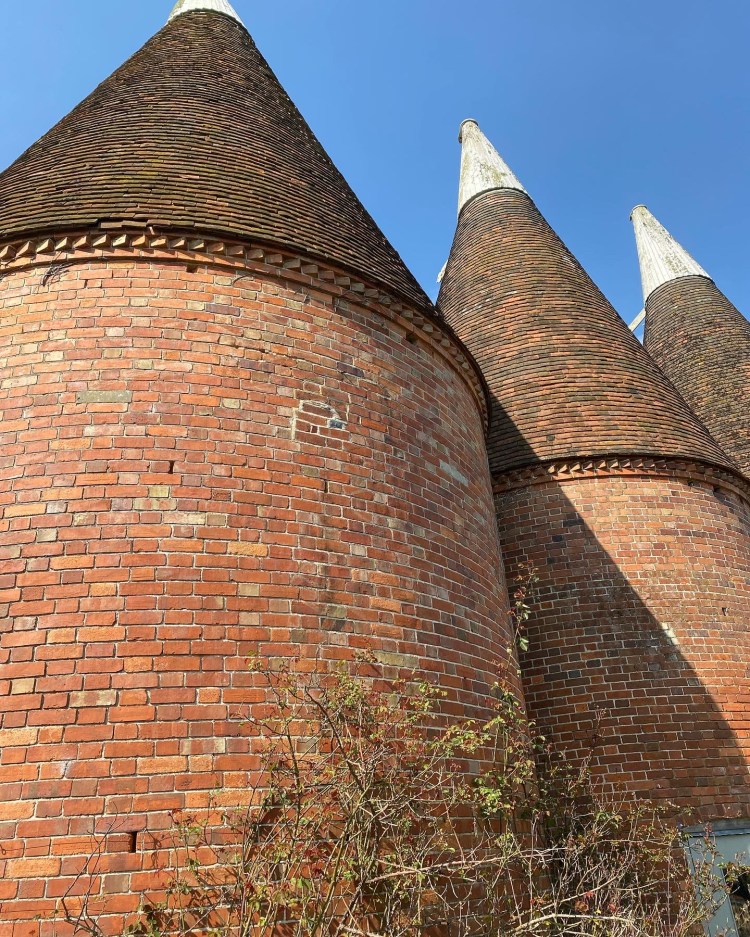
Showing three roundels and cowls

Further Reading
Jones. G and Bell. J (1992) Oasthouses in Sussex and Kent – Their History and Development, Phillimore, Chichester .
Pickles.D and Lake.J Adapting Traditional Farm Buildings – Best Practice Guidelines for Adaptive Reuse, Historic England, available from (https://historicengland.org.uk/images-books/publications/adapting-traditional-farm-buildings/heag158-adapting-traditional-farm-buildings/)
All photos belong to author.
 jfheritage.co.uk