
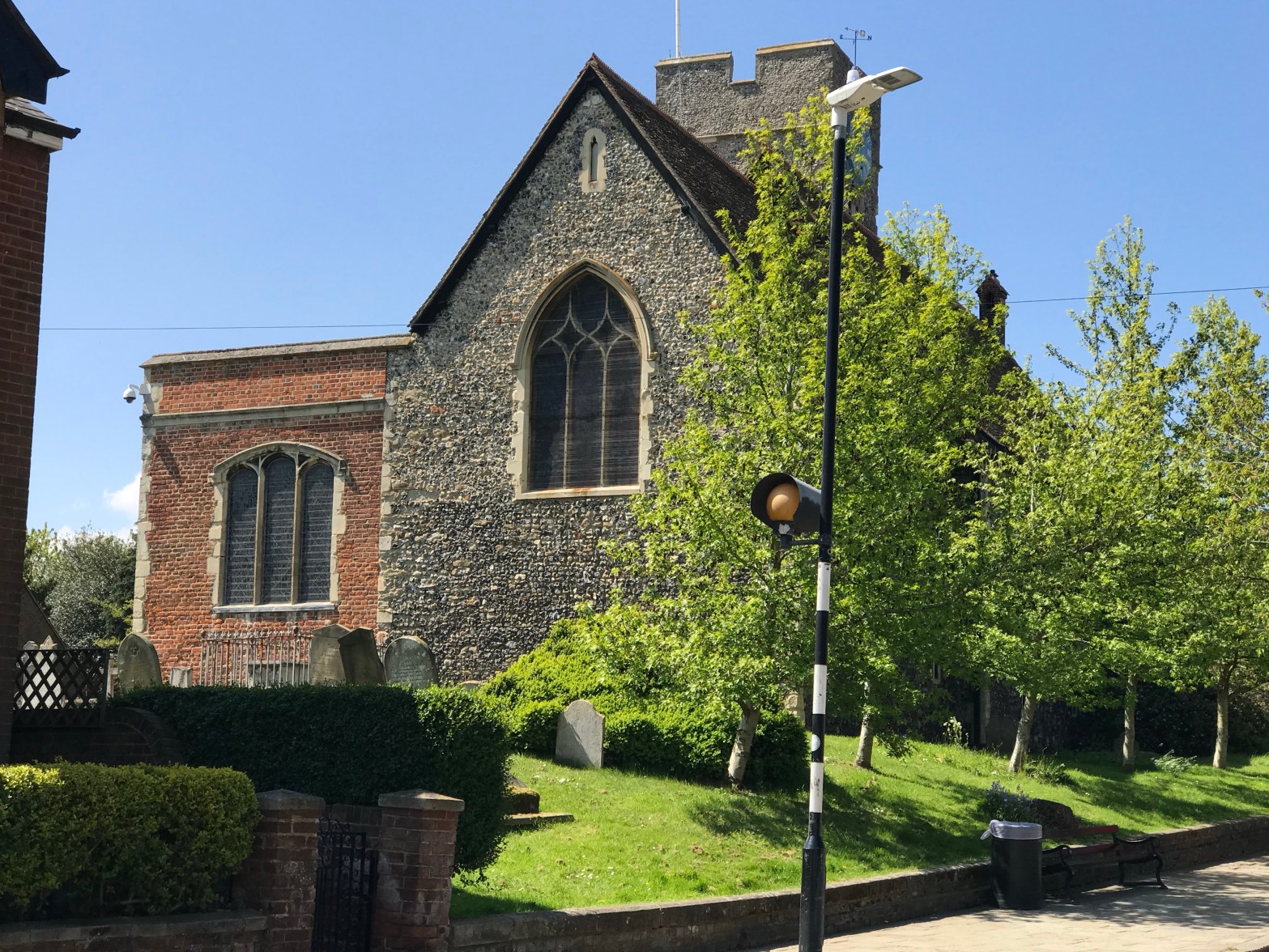
The church of St Dunstans is located just outside the medieval walls of Canterbury, near the ancient Watling Street and has a long and fascinating history, it is also a building of high historical and architectural interest that is reflected in its Grade I listing status. This remarkable church, named after the 10th-century Archbishop of Canterbury, St. Dunstan, is a testament to the city’s rich architectural heritage.
A search on the Kent Historic Environment Record reveals a wide range of archaeological finds dating from the Roman period and later, this is not surprising given the location of the church near to the Roman settlement of (Cantiacorum Durovernum) and its proximity to Watling Street. A Roman cremation cemetery was unearthed to the southeast of the church, shards of pottery to the west and most interestingly Roman street metalling was exposed under the present London Road in 1984. Elements of the church may date to the early 11th century.
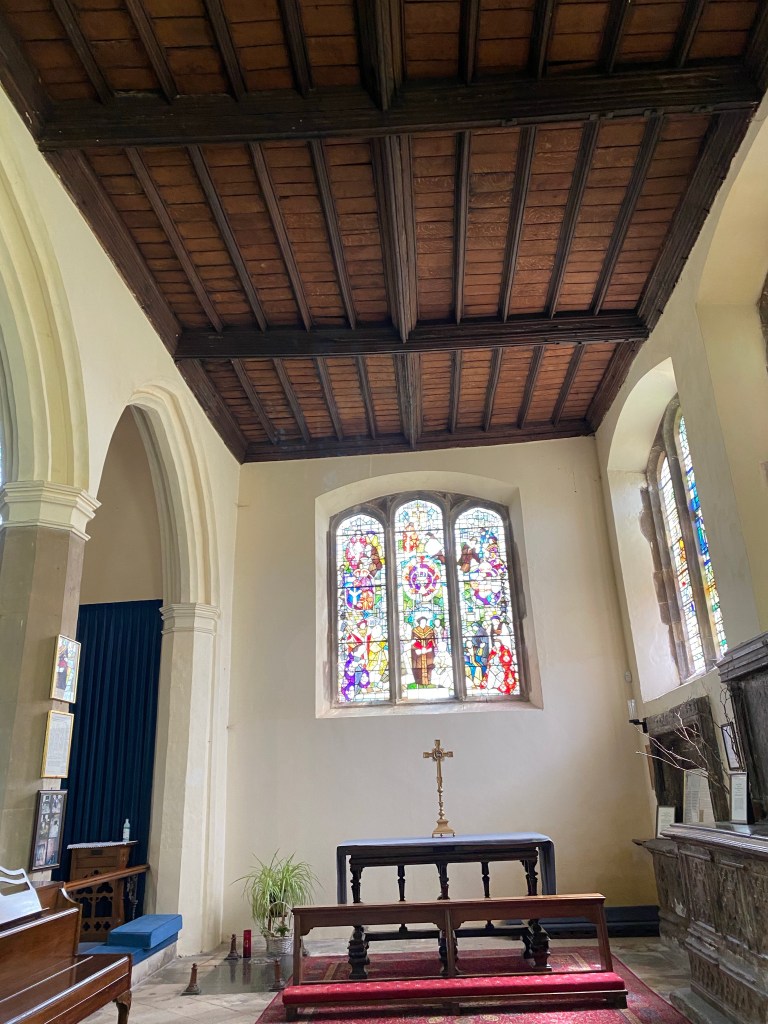
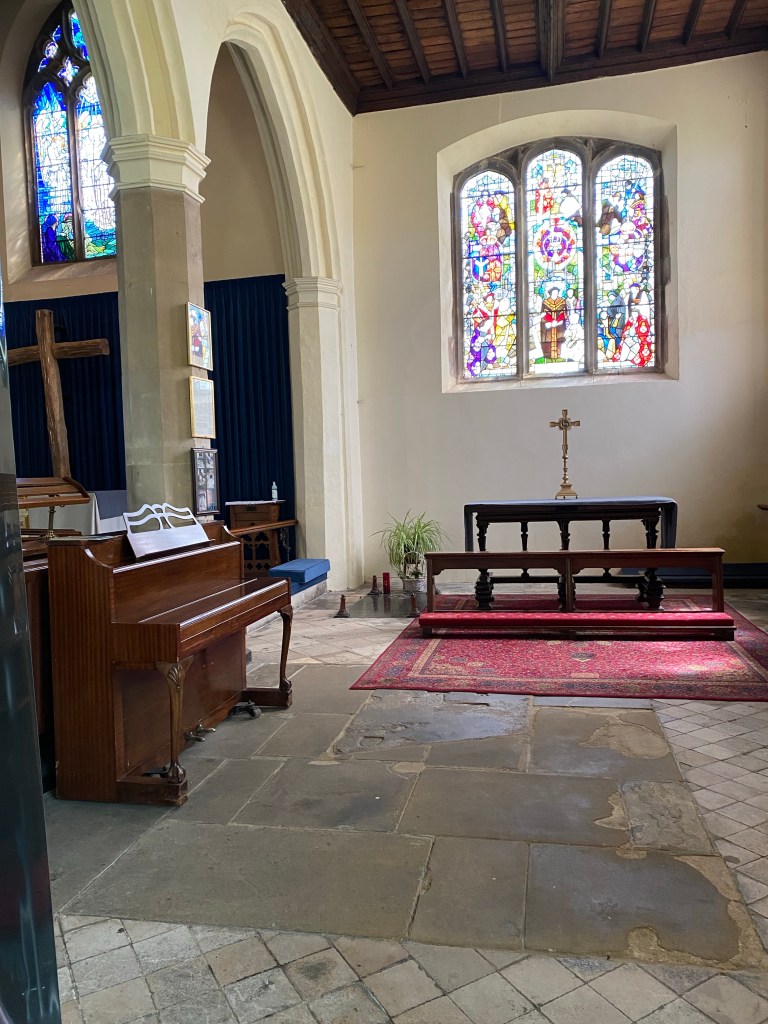
A church has existed on the site for at least 1000 years, and the building is evidently of historic interest due to its age and association with three notable figures in medieval history. St. Dunstan was a historical figure who was Archbishop of Canterbury in the late 10th century and is known to have made several notable reforms to the church. In the twelfth century, King Henry II arrived at St. Dunstan’s to do penance for ordering the death of Thomas Becket. On July 12, 1174, King Henry II arrived at St. Dunstan’s Church, put on a sackcloth shirt, and according to legend, proceeded to Canterbury Cathedral on his hands and knees as an act of penance for his involvement in the death of St. Thomas Becket. The third notable figure associated with the church is Sir Thomas More (author of Utopia and Lord High Chancellor of England from 1529 to 1532) whose skull is located beneath the Roper Chapel.
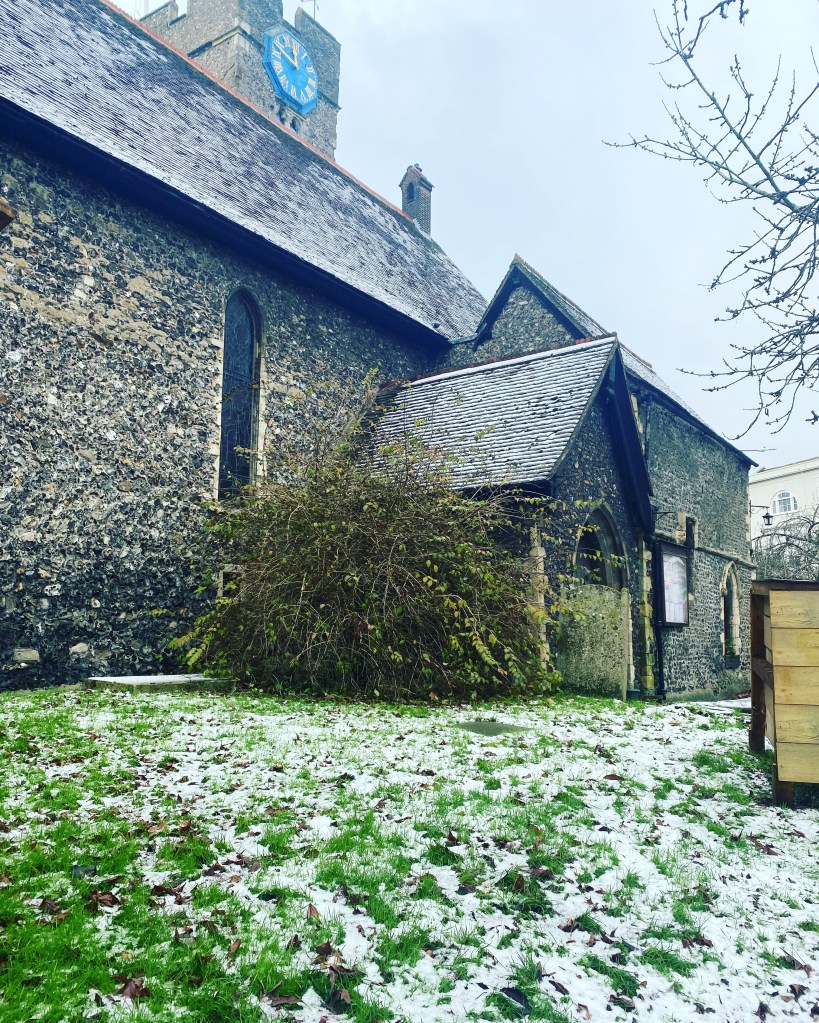
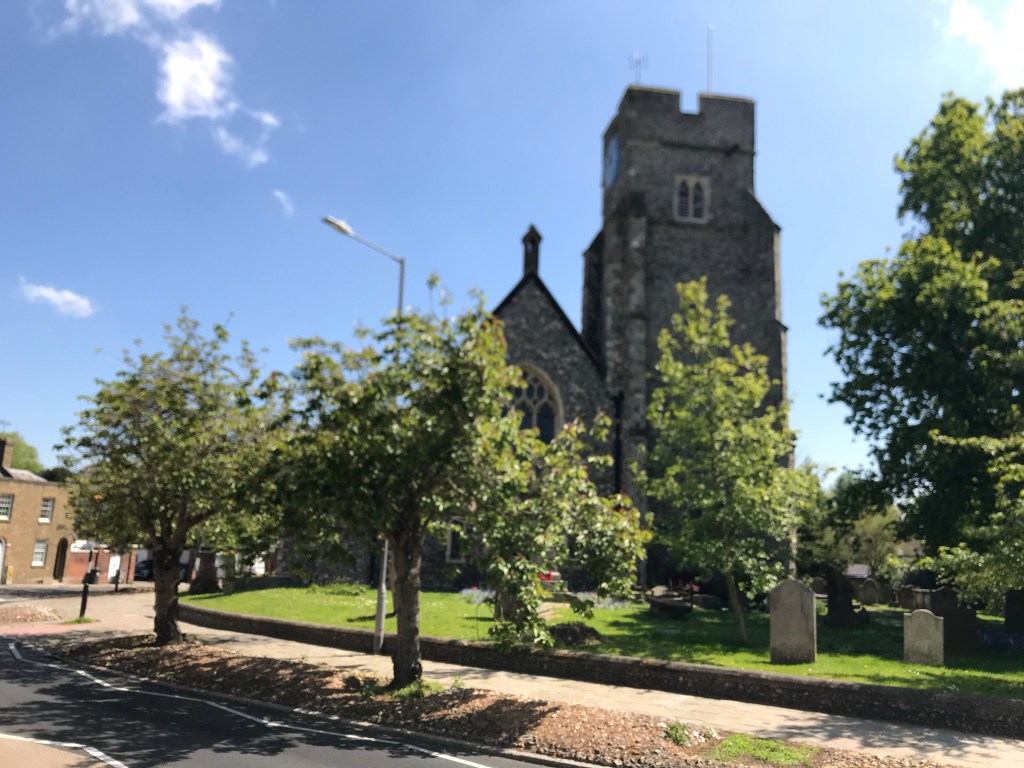
As you approach St. Dunstan’s, you are greeted by its striking facade. The elaborate stone carvings, intricate tracery, are also impressive. The development of the church is clearly visible on the exterior, the large quoins on the northwest corner and the herringbone masonry in the nave are thought to date from the late 11th or early 12th century. The square tower with castellated parapet was added in the 13th century and is constructed in flint with stone quoins, which is the local vernacular material, used on other buildings in Canterbury including St Mildred’s and Eastbridge Hospital. On the west gable end is a 15th century window flanked with lancet windows, a typical feature of ecclesiastical architecture from the period. Windows generally date from between the 13th and 14th century and some have ogee tracery.
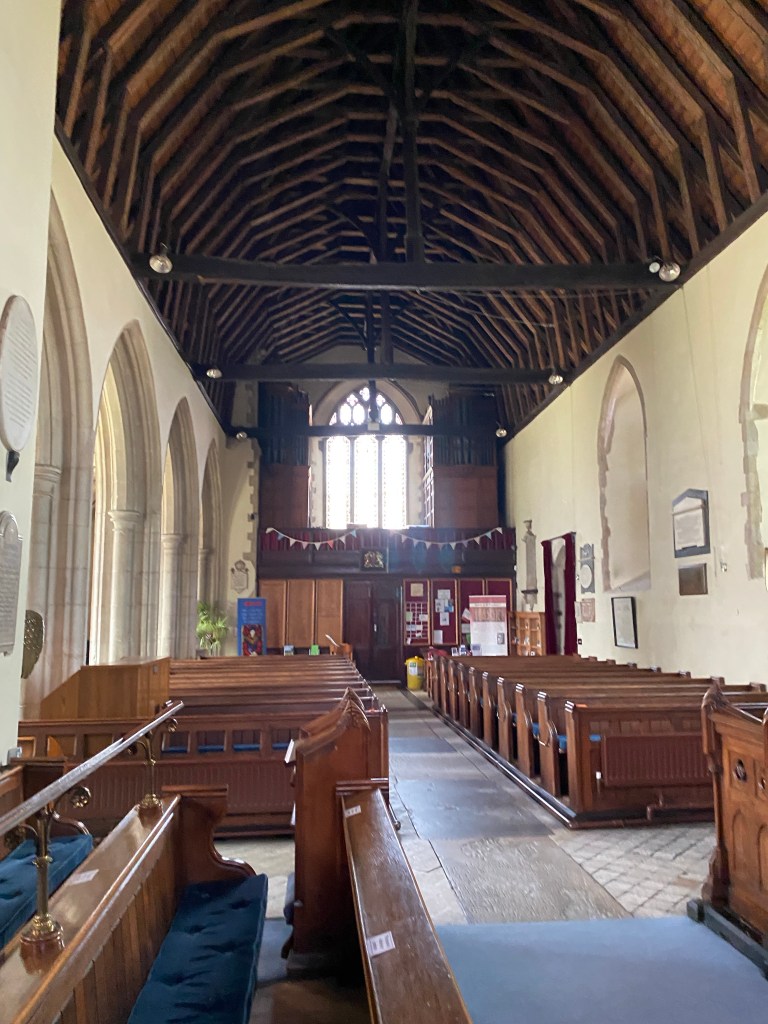
The church has seen numerous changes and enhancements throughout its history. In the 13th century, the roof was raised and lancet windows were installed. In the 14th century, the chantry chapel of the Holy Trinity was constructed. The 15th century witnessed the addition of a new south aisle and ornamental windows. The brick Roper chantry was later added. The church underwent restoration between 1878 and 1880 under the guidance of Ewan Christian, with subsequent repairs carried out in the 20th century. An interesting contrast can be found between the red brick and the more commonly used flint for the church’s construction. The Roper Chapel holds the remains of the Roper family, and notably, behind a metal grill, rests the skull of Sir Thomas More. Additionally, a north porch was added in the 17th century.

The city of Canterbury is famous for its ecclesiastical architecture, however most people are only aware of the churches within the walled city. Venture beyond the walls and you will find fine historic buildings and churches such as this. St. Dunstan’s Canterbury is not only a remarkable architectural gem but also a place of immense historical and religious significance. From the 11th century to the 16th century and beyond, St. Dunstan’s reflects the changing tastes and influences of different time periods and is worth a visit.




Further Reading
List description – https://historicengland.org.uk/listing/the-list/list-entry/1241793
National Churches Trust – https://www.nationalchurchestrust.org/church/st-dunstan-canterbury
British History – https://www.british-history.ac.uk/survey-kent/vol9/pp33-42
Author: Jeremy Fazzalaro
All photos belong to author.
 jfheritage.co.uk